
आरसीओएनएफ प्रायोजित प्राकृतिक खेती प्रशिक्षण का आयोजन मडगांव, गोवा में
आरसीओएनएफ प्रायोजित प्राकृतिक खेती प्रशिक्षण का आयोजन मडगांव, गोवा में
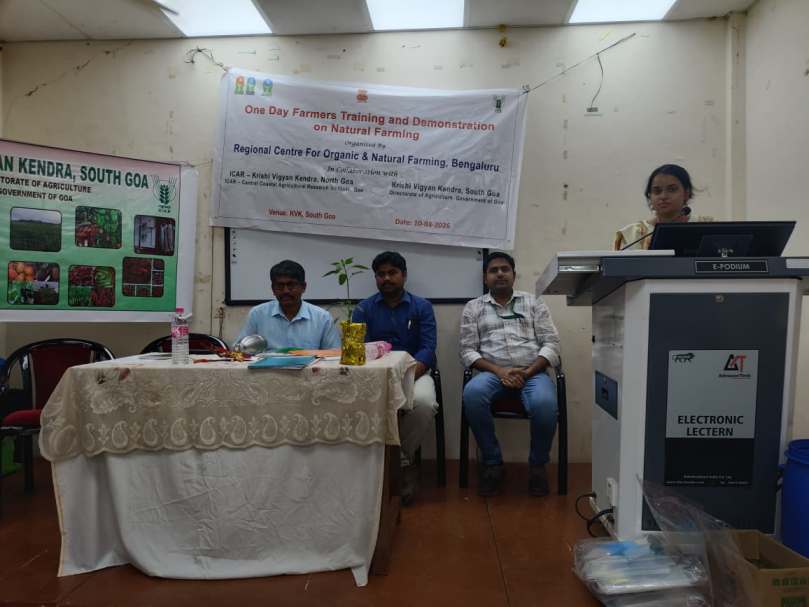
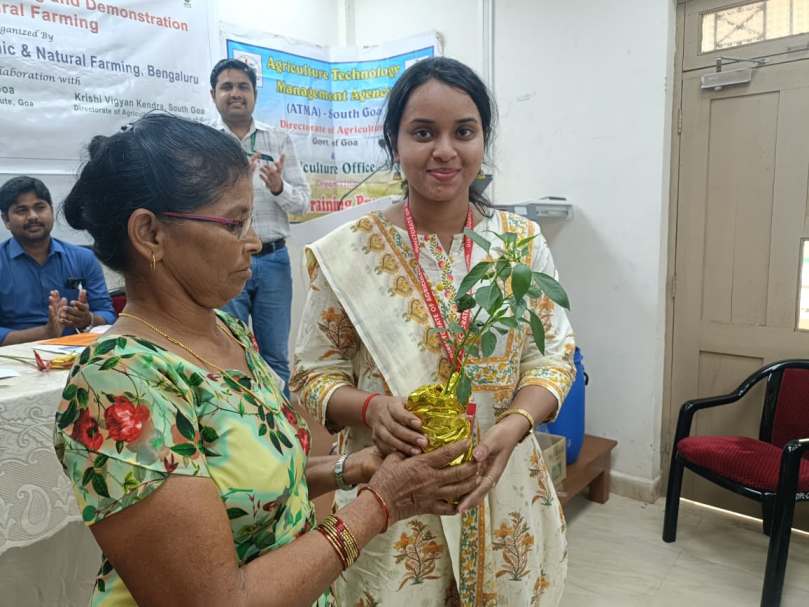
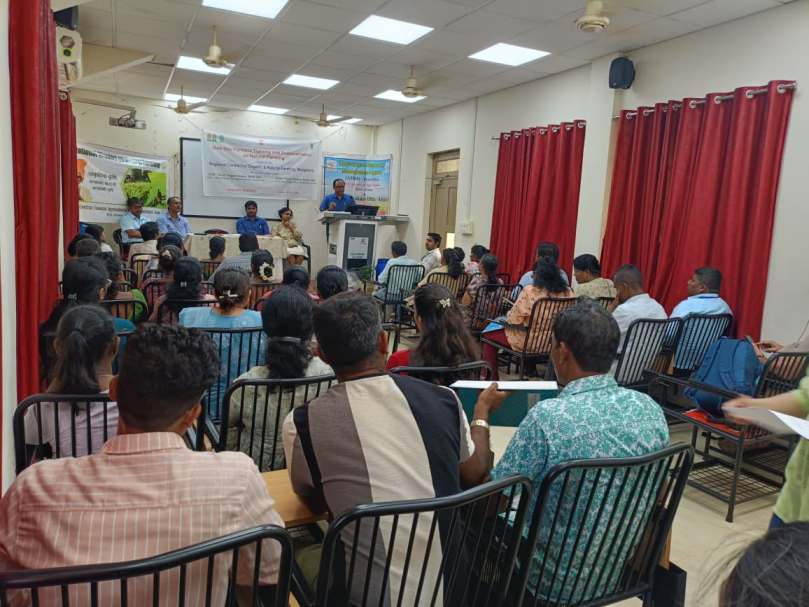
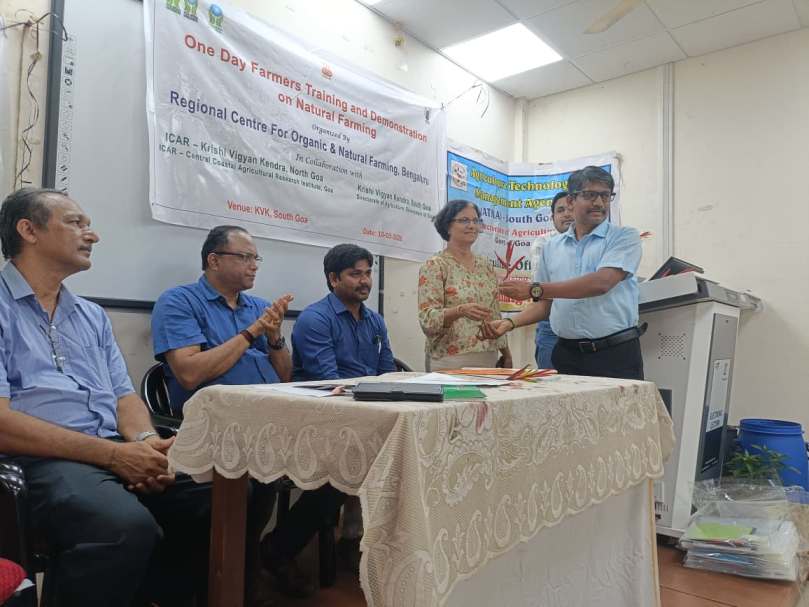
आईसीएआर–कृषि विज्ञान केंद्र (केवीके), उत्तर गोवा, आईसीएआर–केंद्रीय तटीय कृषि अनुसंधान संस्थान, गोवा के अंतर्गत, केवीके, दक्षिण गोवा तथा आत्मा (ATMA), दक्षिण गोवा के सहयोग से क्षेत्रीय जैविक एवं प्राकृतिक खेती केंद्र (RCONF), बेंगलुरु द्वारा प्रायोजित एक दिवसीय प्राकृतिक खेती प्रशिक्षण एवं प्रदर्शन कार्यक्रम का आयोजन 10 मार्च 2026 को केवीके, दक्षिण गोवा में किया गया।
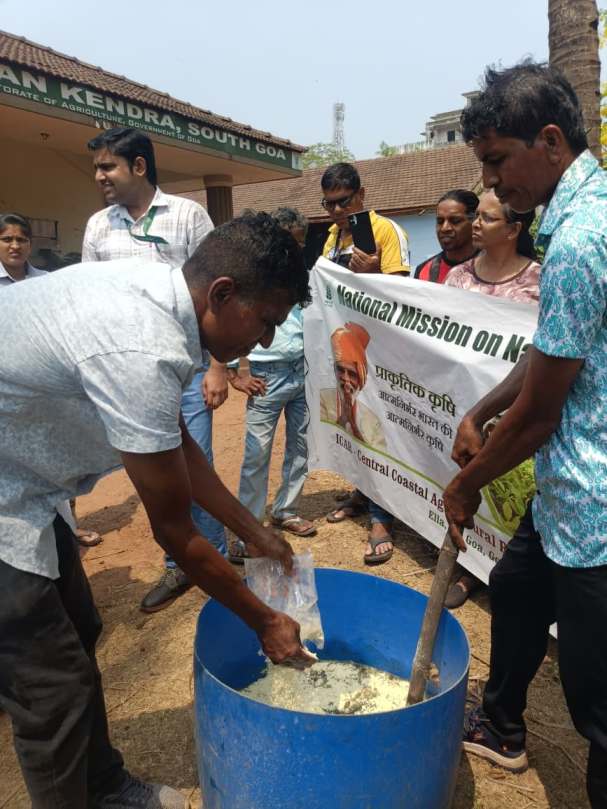
डॉ. एन. बोम्मैयासामी, वरिष्ठ वैज्ञानिक एवं प्रमुख, आईसीएआर–केवीके, उत्तर गोवा ने प्रतिभागियों को प्राकृतिक खेती पद्धतियों के बारे में जानकारी दी तथा स्थानीय रूप से उपलब्ध संसाधनों जैसे गोबर, गोमूत्र और वनस्पति अर्क के उपयोग से जीवामृत, बीजामृत, घन जीवामृत और दशपर्णी अर्क तैयार करने पर विशेष जोर दिया। उन्होंने मिश्रित फसल प्रणाली, मल्चिंग तथा उचित सिंचाई के महत्व को भी रेखांकित किया, जिससे जैव विविधता में वृद्धि, कीटों में कमी तथा मृदा नमी संरक्षण संभव होता है।
डॉ. सतीश संडकौंडा, कनिष्ठ वैज्ञानिक अधिकारी, क्षेत्रीय जैविक एवं प्राकृतिक खेती केंद्र, बेंगलुरु ने बताया कि किसान समूह बनाकर तथा निर्धारित मानकों का पालन करके राष्ट्रीय जैविक एवं प्राकृतिक खेती केंद्र के अंतर्गत पीजीएस-ग्रीन या पीजीएस-ऑर्गेनिक प्रमाणन प्राप्त कर सकते हैं। उन्होंने यह भी बताया कि जैविक उत्पादों के निर्यात तथा राष्ट्रीय एवं अंतरराष्ट्रीय बाजार में विपणन के लिए तृतीय पक्ष प्रमाणन आवश्यक होता है।
श्री दत्तात्रेय पंडित, उप परियोजना निदेशक, आत्मा, दक्षिण गोवा ने कार्यक्रम को संबोधित करते हुए गोवा में प्राकृतिक खेती के महत्व पर प्रकाश डाला, विशेषकर राज्य में छोटे जोत, समृद्ध जैव विविधता और रसायन मुक्त सुरक्षित खाद्य पदार्थों की बढ़ती मांग को ध्यान में रखते हुए। श्री एडोल्फो राजेश दा कोस्टा, क्षेत्रीय कृषि अधिकारी (ZAO), मडगांव ने किसानों को प्राकृतिक खेती अपनाने के लिए प्रेरित किया, जिससे खेती की लागत कम हो, उत्पाद की गुणवत्ता में सुधार हो तथा विभिन्न राज्य सरकार की योजनाओं का लाभ मिल सके। सुश्री रोमा शिरोडकर, सहायक कृषि अधिकारी (AAO), मडगांव ने जैविक और प्राकृतिक खेती के बीच अंतर स्पष्ट किया।
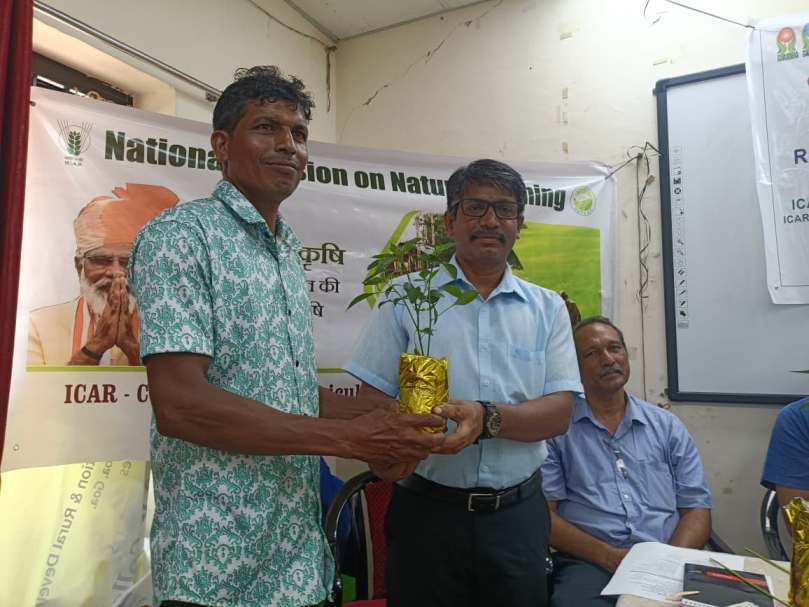
श्री राहुल कुमार ने मृदा उर्वरता में सुधार हेतु सूक्ष्मजीव गतिविधि और जैविक पदार्थ की भूमिका, प्राकृतिक कीट एवं रोग प्रबंधन तथा देशी गाय आधारित इनपुट्स के महत्व पर व्याख्यान दिया। प्रगतिशील किसान श्री क्लैडियस डायस ने अपने अनुभव साझा करते हुए किसानों को प्राकृतिक खेती अपनाने के लिए प्रेरित किया।
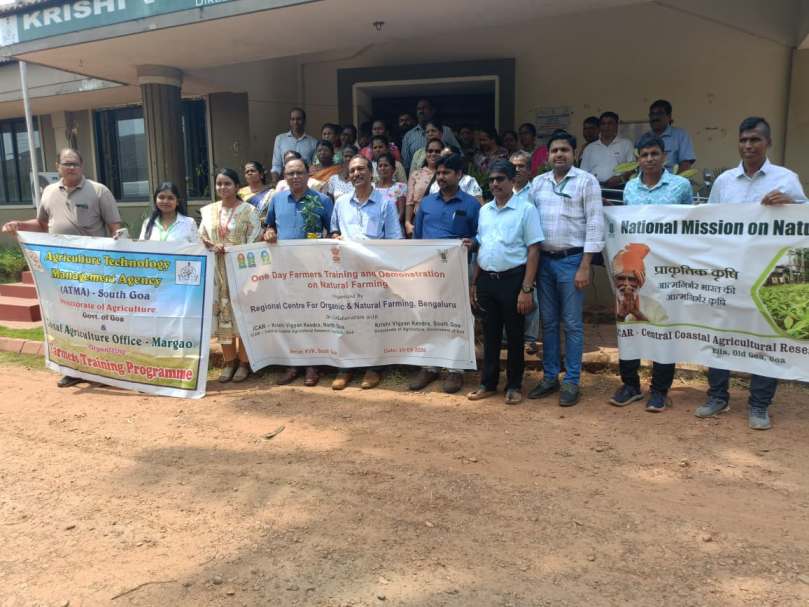
कार्यक्रम में कुल 50 किसानों (12 पुरुष एवं 38 महिलाएं) तथा 7 अधिकारियों ने भाग लिया। प्रतिभागियों ने तकनीकी सत्रों के दौरान विशेषज्ञों के साथ सक्रिय रूप से संवाद किया और अपनी जिज्ञासाओं का समाधान किया। कार्यक्रम का समन्वयन श्री राहुल कुमार, डॉ. एन. बोम्मैयासामी तथा डॉ. सतीश संडकौंडा द्वारा किया गया।
RCONF-Sponsored Natural Farming Training Organised at Margoa, Goa
ICAR–Krishi Vigyan Kendra, North Goa, under ICAR–Central Coastal Agricultural Research Institute, Goa, in collaboration with KVK, South Goa and ATMA, South Goa, organized a one-day training and demonstration on natural farming, sponsored by the Regional Centre for Organic and Natural Farming (RCONF), Bengaluru, on 10 March 2026 at KVK, South Goa. Dr. N. Bommayasamy, Senior Scientist and Head, ICAR–KVK, North Goa, briefed participants on natural farming practices, emphasizing the use of locally available inputs such as cow dung, cow urine, and plant extracts for preparing Jeevamrit, Beejamrit, Ghana Jeevamrit, and Dashparni Ark. He also highlighted the benefits of mixed cropping, mulching, and proper irrigation for improving biodiversity, reducing pests, and conserving soil moisture etc. Dr. Satish Sandakonda, Junior Scientific Officer, Regional Centre for Organic and Natural Farming, Bengaluru, explained that farmers can obtain PGS-Green or PGS-Organic certification by forming groups and following prescribed standards under the National Centre for Organic and Natural Farming. He also noted that third-party certification is required for exporting organic products and marketing them in national and international markets. Shri Dattatri Pandit, Deputy Project Director, ATMA, South Goa, addressed the gathering and highlighted the importance of natural farming in Goa, considering the state’s small landholdings, rich biodiversity, and growing demand for safe, chemical-free food. Shri Adolfo Rajesh Da Costa, Zonal Agriculture Officer (ZAO), Margao, encouraged farmers to adopt natural farming to reduce cultivation costs, improve product quality, and benefit from various state government schemes. Ms. Roma Shirodkar, AAO, Margao, explained the differences between organic and natural farming.
Shri Rahul Kumar delivered lectures on improving soil fertility through enhanced microbial activity and organic matter, natural pest and disease management, and the role of indigenous cow-based inputs in natural farming. Shri Cladias Dias, a progressive farmer, shared his field experiences and motivated farmers to adopt natural farming practices.A total of 50 farmers (12 men and 38 women) and seven officials participated in the programme. The participants actively interacted with the experts and clarified their queries during the technical sessions. The programme was coordinated by Shri Rahul Kumar, Dr. N. Bommayasamy, and Dr. Satish Sandakonda.
The Coordinators for the programme were Mr. Shashi Vishwakarma, Dr. Gopal R. Mahajan, and Dr. Dahiphale, with technical assistance from Mr. Manish Patel.