
दोहराव वाली गर्भधारण समस्या से ग्रस्त गायों के प्रबंधन हेतु पोषण-हार्मोनल उपचार पर प्रशिक्षण कार्यक्रम
Training on Nutri-Hormonal Therapy for Management of Repeat Breeding Cows
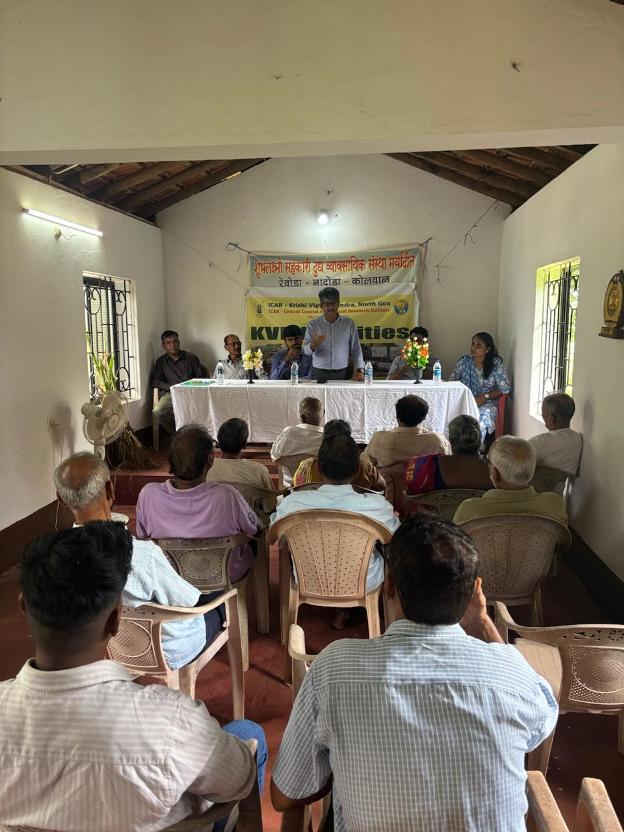
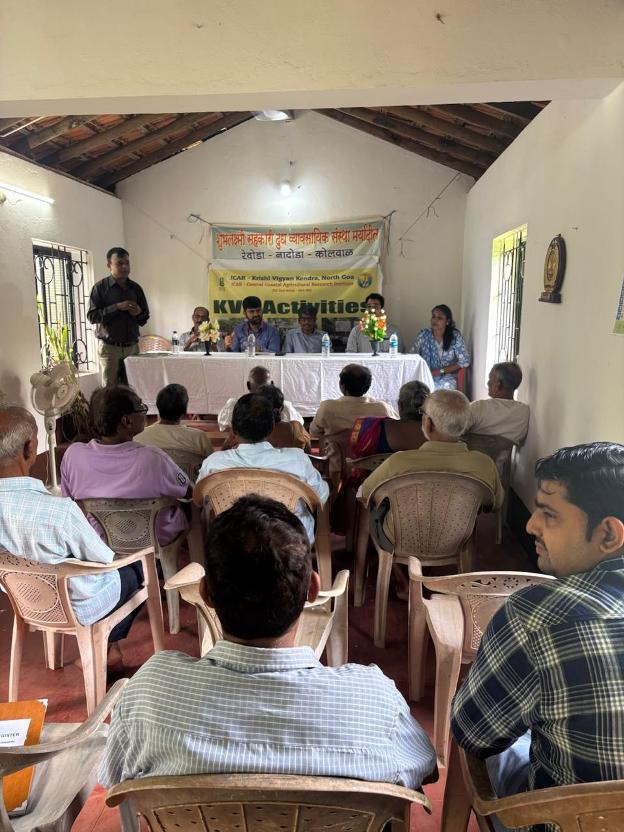
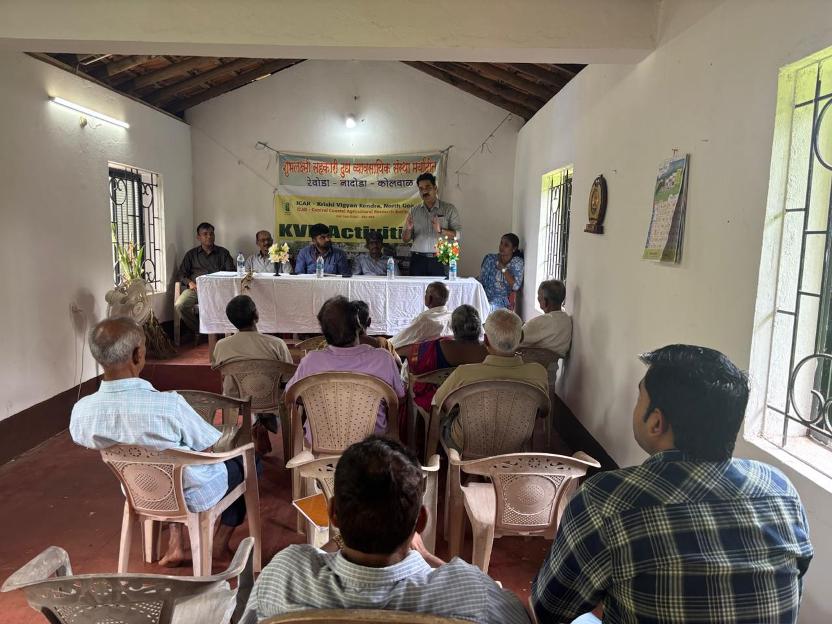
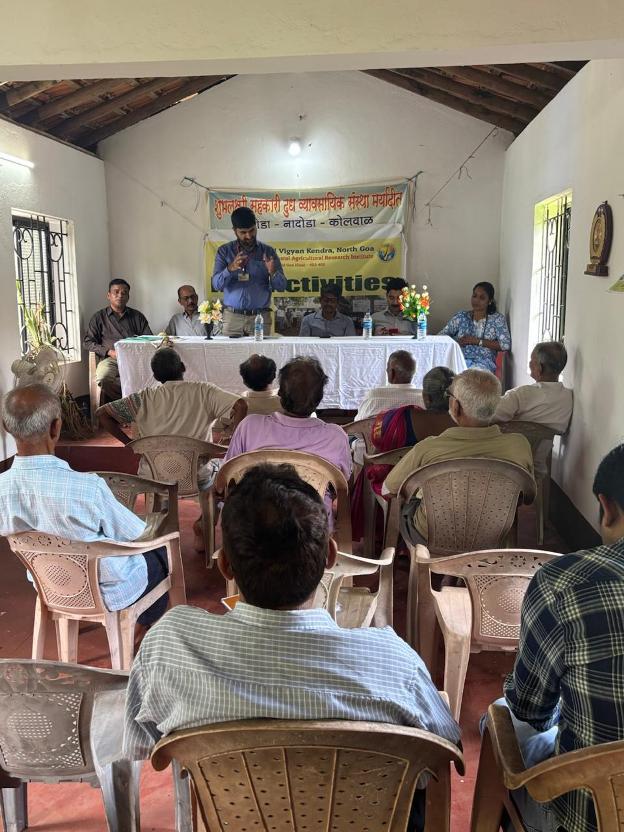
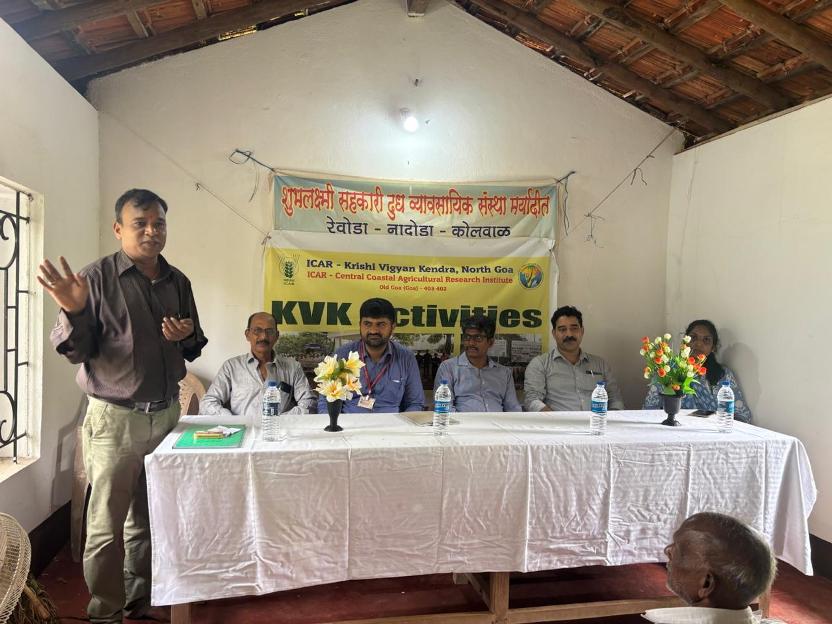
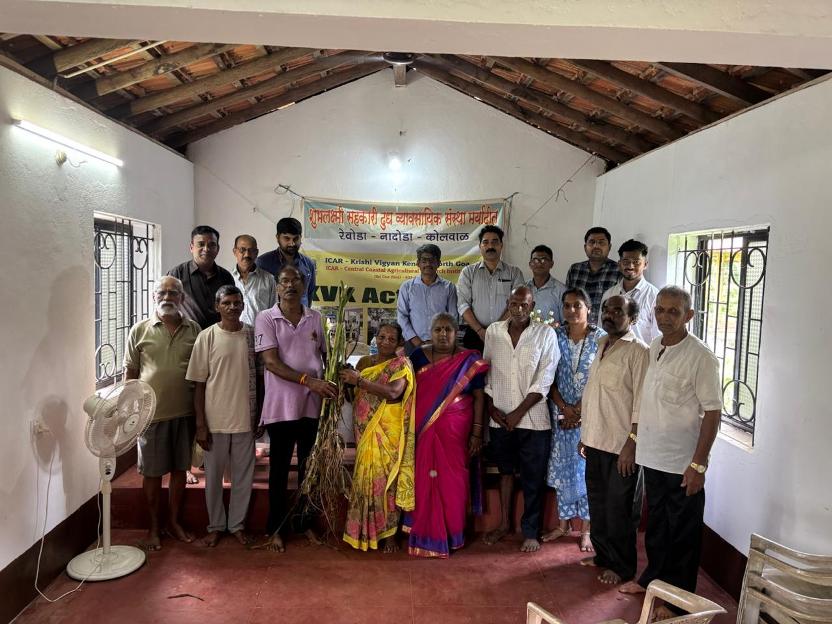
ICAR–Krishi Vigyan Kendra (KVK), North Goa, ICAR–CCARI, Goa, conducted a training programme on “Reproductive Management in Repeat Breeding Cows by Nutri-Hormonal Therapy” on 20 August 2026 in collaboration with the Department of Animal Husbandry and Veterinary Services at Shubhalaxmi Dairy Cooperative Society, Revona, Bardez, North Goa.
Dr. N. Bommayasamy, Senior Scientist and Head, ICAR–KVK, North Goa, welcomed the gathering and emphasized balanced feed management to reduce feeding costs and improve dairy animal productivity and reproductive performance. He encouraged farmers to utilize community and fallow lands for green fodder cultivation. He highlighted high-yielding perennial fodder crops such as hybrid Napier for ensuring year-round fodder availability. He also recommended Azolla as a protein-rich feed supplement to improve animal nutrition and reduce dependence on costly concentrate feeds.
Dr. Gokuldas P.P., Senior Scientist (Animal Reproduction), explained the causes and management of repeat breeding in cows and detailed the nutri-hormonal therapy protocol involving feeding bypass fat @ 75 g per animal per day for 45 days from the date of artificial insemination along with hormonal treatment on the 7th or 8th day after insemination. He informed the farmers that the protocol has shown encouraging results under field conditions and also discussed various preventive measures for maintaining proper reproductive health and improving conception rate. He stressed the importance of timely heat detection, proper artificial insemination, adequate nutrition and regular reproductive examination for reducing repeat breeding problems.
Dr. Udharwar S.V., SMS (Animal Science), explained hydroponic fodder production, Azolla cultivation and silage making using maize fodder, and highlighted the potential of fodder production and marketing as an enterprise for rural youth due to the increasing demand for quality fodder in Goa. He also explained the importance of feeding chelated mineral mixture and bypass fat to lactating cows for improving milk yield and milk fat percentage. The importance of maintaining a balanced ration with adequate energy, protein, minerals and vitamins for better reproductive performance was also emphasized.
Dr. Thomas Edison, Veterinary Officer, explained various schemes of the Department of Animal Husbandry and Veterinary Services beneficial to dairy farmers, including fodder development, chaff cutter and fencing schemes. He encouraged farmers to make maximum use of the available government schemes for improving dairy farm infrastructure and reducing production costs.
The programme also emphasized the importance of regular deworming, vaccination, mineral supplementation and hygienic management for maintaining healthy and productive dairy animals.The programme included an interactive farmer–scientist session, where farmers discussed their problems related to feeding, reproduction, heat detection and dairy management. The experts provided practical solutions and clarified the queries raised by the participants. Farmers showed keen interest in adopting improved fodder production techniques and the nutri-hormonal management protocol for repeat breeding cows.Mr. Jaganath Korgaonkar, Chairman, Shubhalaxmi Dairy Cooperative Society, appreciated the programme and expressed satisfaction with the farmer–scientist interaction and proposed the vote of thanks. The training programme was coordinated by Dr. Udharwar Sanjaykumar Vithalrao, SMS (Animal Science), Mr. Rahul Kumar, Dr. N. Bommayasamy and Dr. Gokuldas P.P. A total of 15 participants, including 13 male and 2 female farmers, participated in the training programme. The participants actively interacted with the experts and expressed interest in adopting improved nutritional and reproductive management practices at their farms.