
Climate-Resilient Cage Aquaculture: Exposure-cum-Interaction Session with Seabass Farmers of Kumta, Karnataka
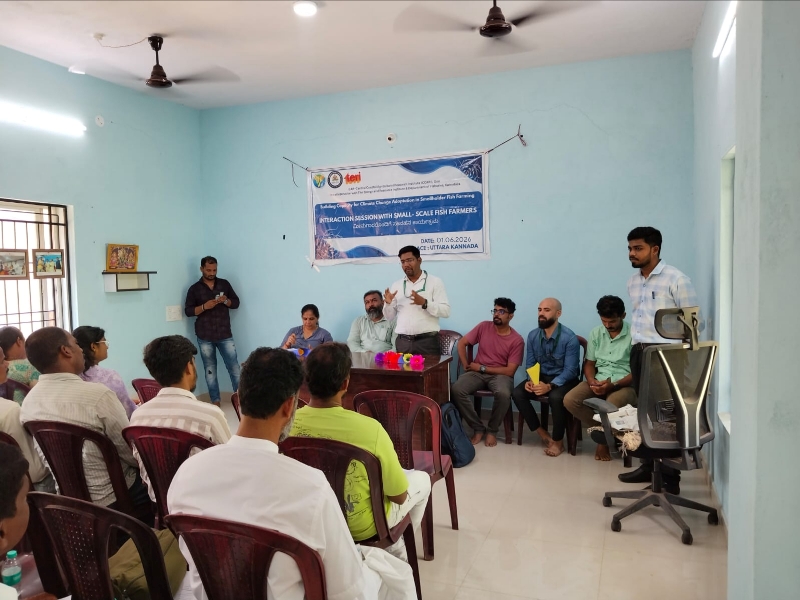
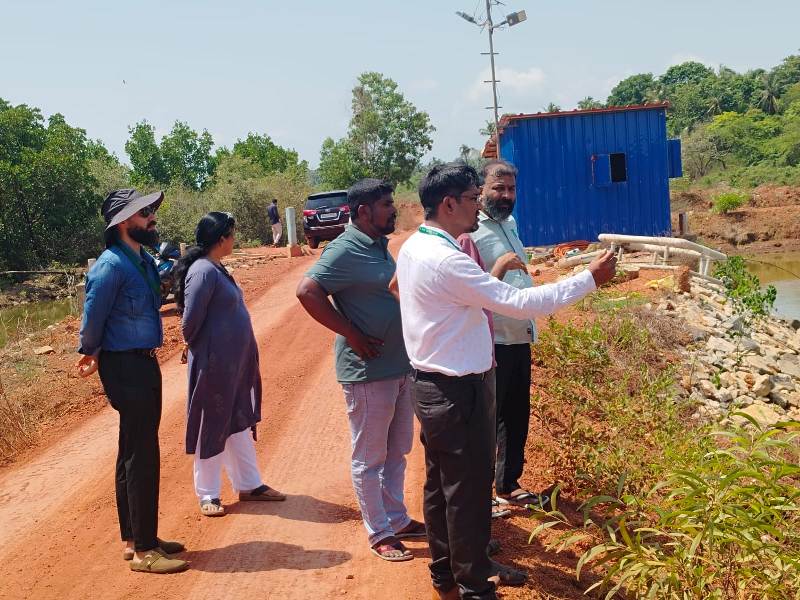
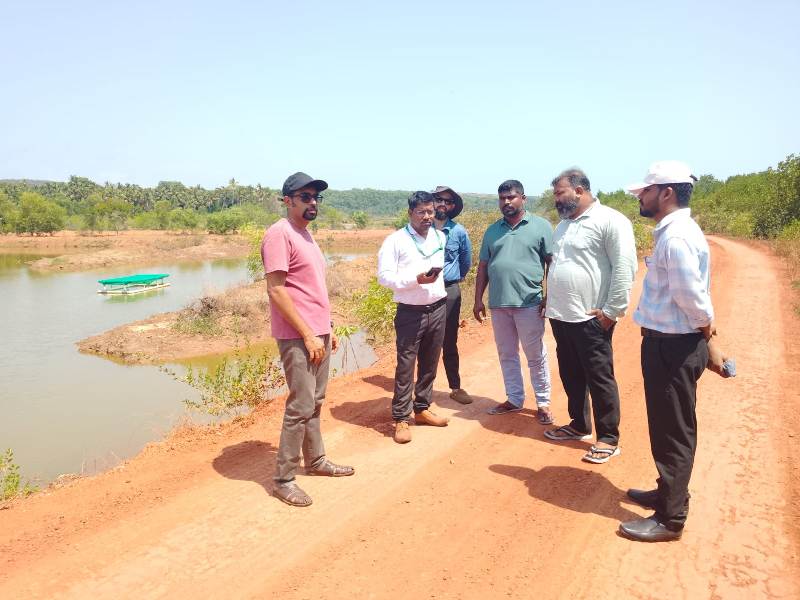
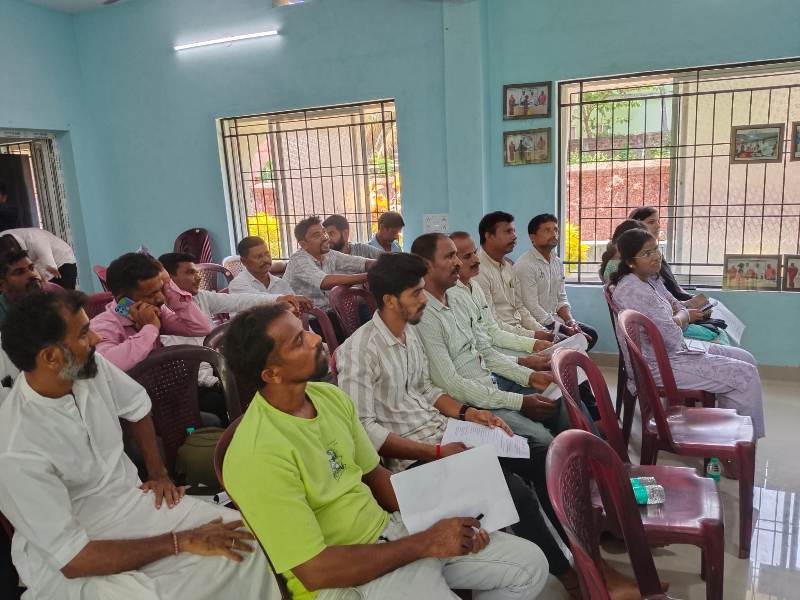
An exposure-cum-interaction session was held on 1 June 2026 at the ADF Office, Kumta, under the ADB-funded project at ICAR-CCARI, to build the technical capacity of small-scale fish farmers and promote climate-resilient aquaculture in coastal Karnataka. Farmers engaged in seabass (Lates calcarifer) cage culture face recurring problems of disease, sub-optimal stocking density, poor site selection and environmental variability. The session aimed to deliver scientific guidance, expose participants to innovative technologies and value-addition strategies, and strengthen direct farmer–scientist interaction for practical problem solving.Following an inaugural address by Shri. Trivesh S. Mayekar outlining the project, the scientific team responded to farmer queries — chiefly disease outbreaks and ectoparasite mortalities — with evidence-based guidance. Recommendations covered accurate Feed Conversion Ratio (FCR) calculation and improved feed management to cut costs; timely availability and proper acclimatisation of quality seed; maintenance of optimal water quality and stocking density to avoid stress-induced immunosuppression; scientific site selection (water depth, inter-cage spacing); and regular cage cleaning to control biofouling.Pearl spot (Etroplussuratensis) was recommended as an eco-friendly biological agent for cage cleaning, as it grazes on algae and biofouling, reducing labour and improving water exchange. The need for better coordination with dam authorities to avoid sudden water release during stocking was also flagged. On the economic side, the team promoted Integrated Multi-Trophic Aquaculture (IMTA), Floating Raft Barrel systems and partial harvesting, alongside value addition and direct marketing to star hotels and restaurants, social-media-based promotion, and fisheries-linked ecotourism to enhance income and reduce price volatility.The 28 participating farmers gained enhanced knowledge of scientific, climate-resilient aquaculture practices and greater interest in innovative technologies and sustainable methods such as biological cage cleaning. The session strengthened linkages between farmers, the Department of Fisheries and ICAR-CCARI scientists, fostering farmer-centric problem solving and contributing to capacity building, improved income and the long-term sustainability of coastal aquaculture livelihoods in Karnataka.The programme was coordinated and implemented by Dr. Trivesh S. Mayekar, Scientist (Fish Genetics and Breeding), and Dr. Sreekanth G. B., Senior Scientist (Fisheries Resource Management), ICAR-CCARI, together with Dr. Elroy Joe Pereira, Associate Fellow, TERI, Goa, with logistical, coordination and field support provided by Mr. Abhishek Kenganal, Consultant and State Level Coordinator (Karnataka), TERI.