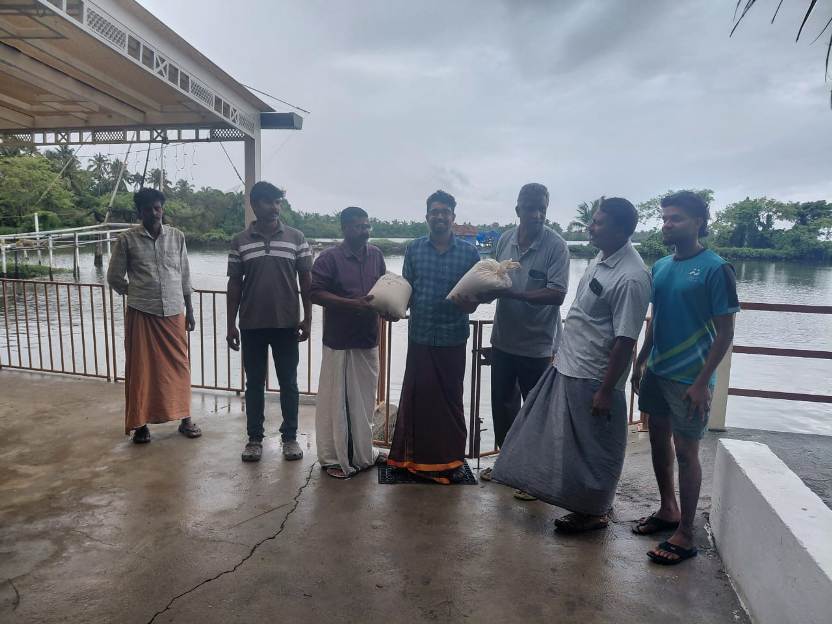
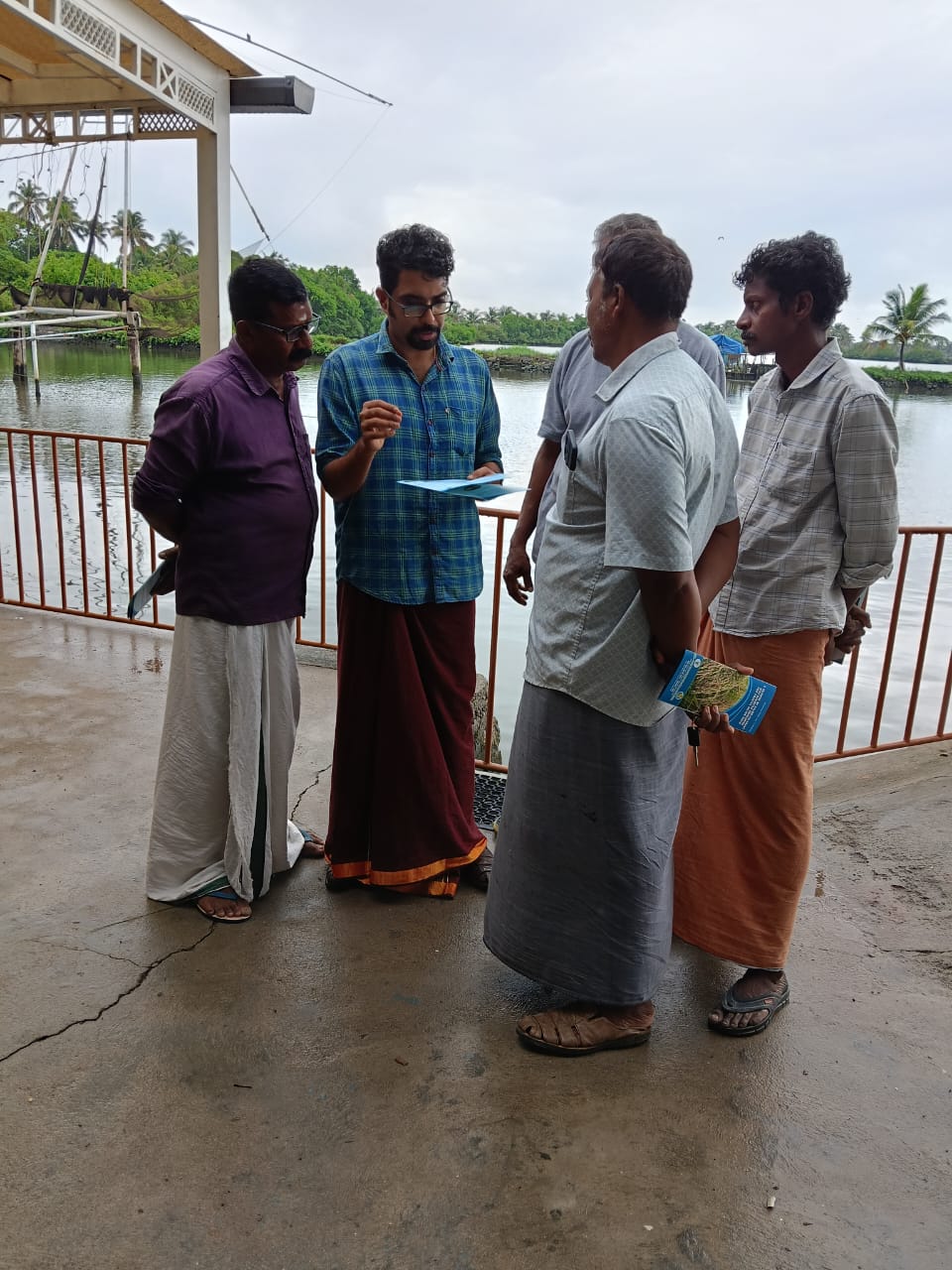
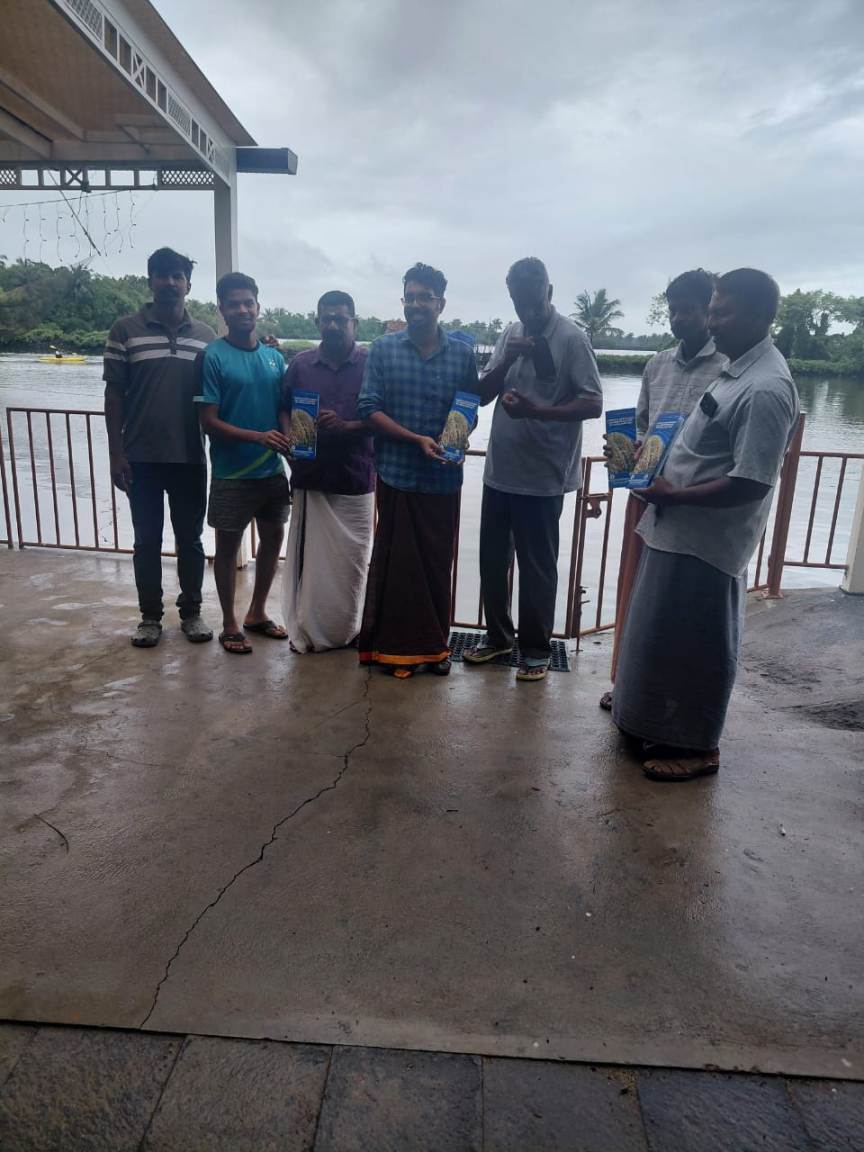

Distribution of salt tolerant rice varieties for cultivation at Kadamakudy, Kochi, Kerala
Kadamakudy Island is emerging as an important tourism destination in Kerala, offering significant opportunities for the development of sustainable and regenerative tourism models. In this context, the institute assured comprehensive technical support to promote environmentally sustainable livelihood interventions in the region. Rice–fish integrated farming, a traditional production system practiced by local farmers, was identified as a promising approach due to its resource-use efficiency and circular nutrient dynamics, wherein rice residues serve as feed for fish and shrimp, while fish wastes contribute to nutrient recycling and soil fertility enhancement for rice cultivation. Recognizing the farmers’ interest in adopting improved salt-tolerant rice varieties, seeds of Goa Dhan 4, a high-yielding salt-tolerant rice variety developed by ICAR-CCARI, Goa, were distributed to four farmers of the Kadamakudy region on 7 June 2026 for field-level demonstrations. During interactions with the farmers, Dr. Sreekanth G.B., Senior Scientist (FRM), disseminated information on the technologies and package of practices developed by the institute, emphasizing the judicious use of fertilizers and the adoption of sustainable integrated farming systems such as rice–fish farming. Farmers were also provided with technical literature and information folders detailing recommended cultivation practices. The participants appreciated the institute’s efforts and expressed their willingness to actively collaborate in future research and development activities. The programme was coordinated by Dr. Sreekanth G.B., Senior Scientist (FRM). Dr. Manohara K.K., Senior Scientist (Genetics and Plant Breeding), ICAR–CCARI, Goa, supplied seeds of the rice variety Goa Dhan 4 and provided the recommended improved package of cultivation practices to the farmers.