
Kisan Gosthi on Promoting Biofertilizers for Sustainable and Eco-Friendly Agriculture
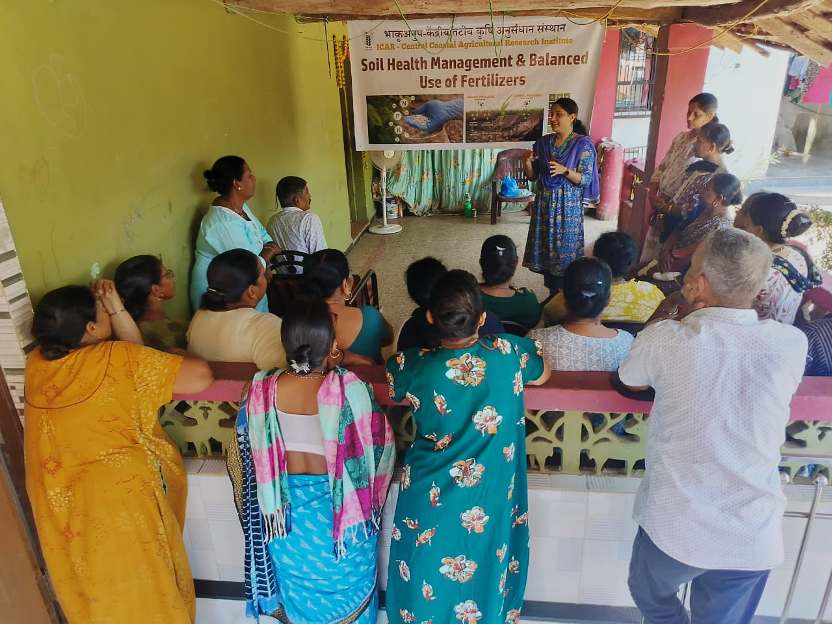
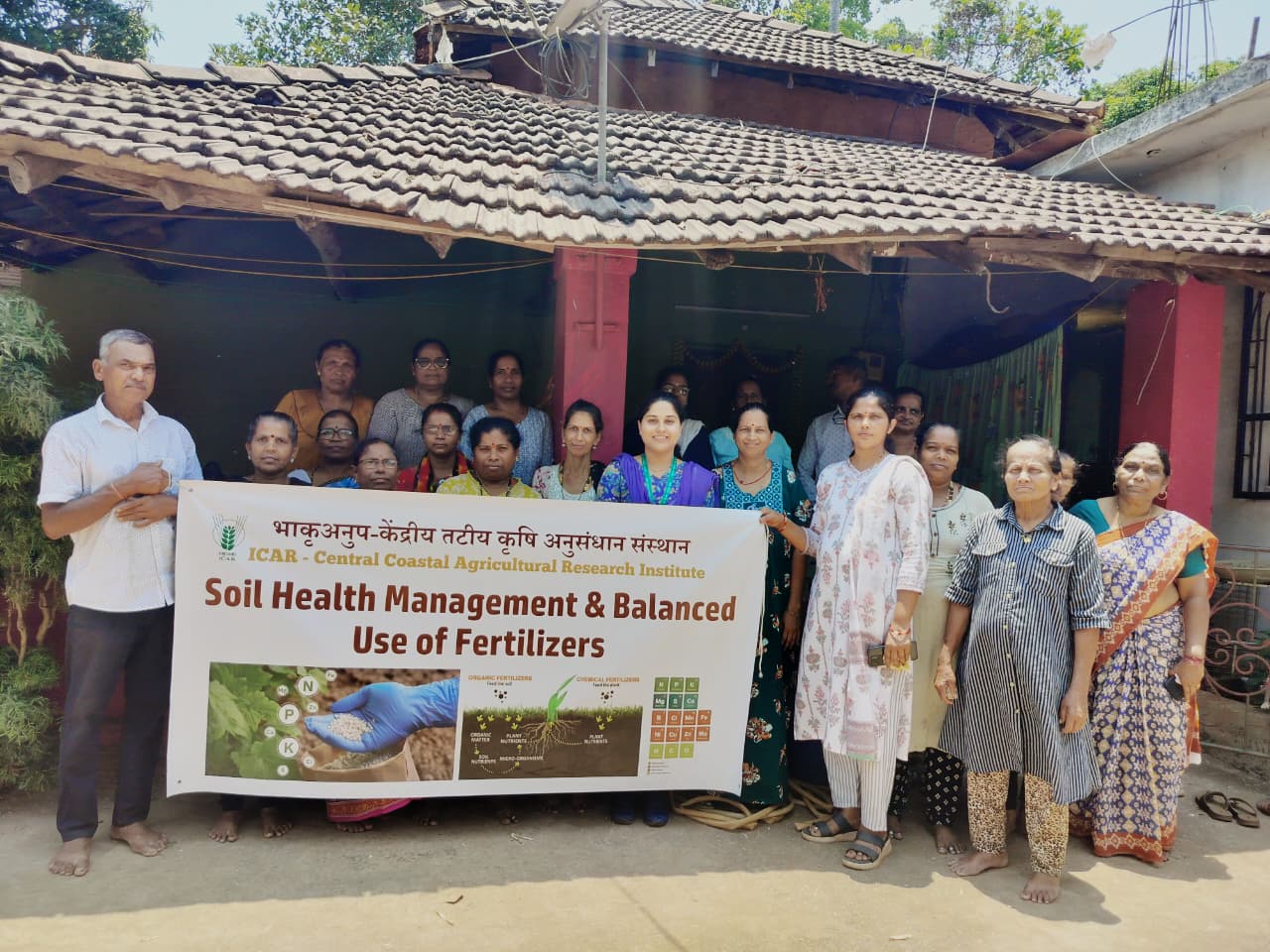
ICAR-Krishi Vigyan Kendra, North Goa, functioning under the aegis of ICAR-Central Coastal Agricultural Research Institute, Goa, organized a Kisan Gosthi-cum-Awareness Programme on the promotion and application of biofertilizers for sustainable and eco-friendly agriculture at Madel, Tiswadi taluka, North Goa, on April 24, 2026.The programme was conducted as part of the ongoing “Intensive Awareness Campaign for Adoption of Science-Based Nutrient and Other Input Management” with the objective of encouraging sustainable, eco-friendly, and climate-resilient farming practices among farmers.
During the programme, experts emphasized the importance of biofertilizers in improving soil fertility, enhancing nutrient availability, and reducing dependence on chemical fertilizers. They explained that biofertilizers contain beneficial microorganisms that help in fixing atmospheric nitrogen, solubilizing phosphorus, mobilizing potassium and zinc, and improving overall nutrient use efficiency in crops.The resource persons also explained various methods of biofertilizer application, including seed treatment, seedling root dip treatment, soil application, and mass multiplication techniques for on-farm use. Farmers were sensitized about different categories of biofertilizers such as nitrogen-fixing bacteria, phosphate-solubilizing bacteria (PSB), potassium-mobilizing bacteria (KMB), and zinc-solubilizing microorganisms, along with their specific roles in enhancing crop productivity and maintaining long-term soil health.
Special emphasis was laid on integrating biofertilizers with organic manures and judicious use of inorganic fertilizers to achieve balanced nutrient management and sustainable crop production. Experts also highlighted the role of biofertilizers in climate-smart agriculture by reducing greenhouse gas emissions associated with chemical fertilizer production and application, while also contributing to improved soil carbon sequestration.The session was highly interactive, with participating farmers actively engaging in discussions and seeking practical solutions for adopting biofertilizers in different cropping systems.A total of 20 participants attended the programme, including 2 farmers and 18 farm women, reflecting strong interest among rural women in sustainable agricultural practices.The programme was coordinated by Dr. Nivya K. R., SMS (Floriculture and Landscaping), and Dr N Bommayasamy, Senior Scientist & Head, ICAR-KVK, North Goa.