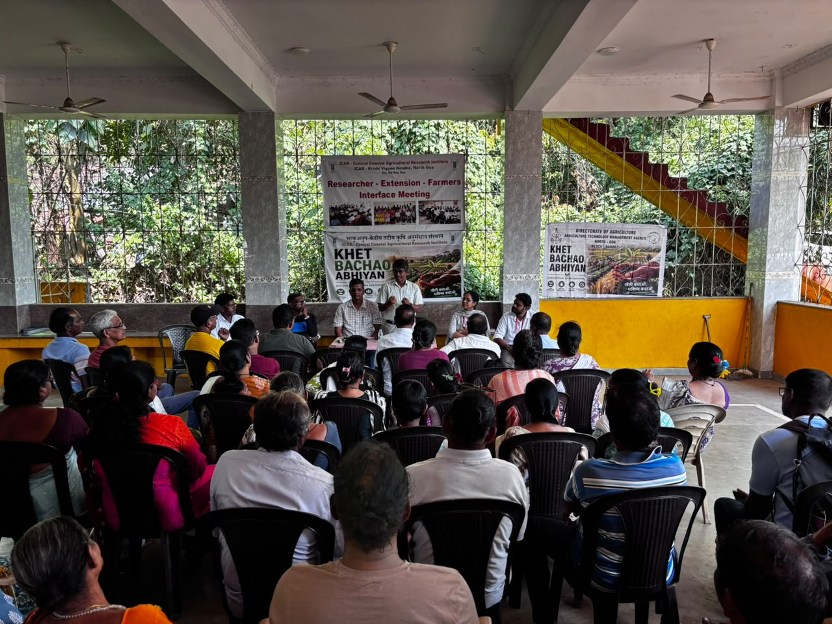
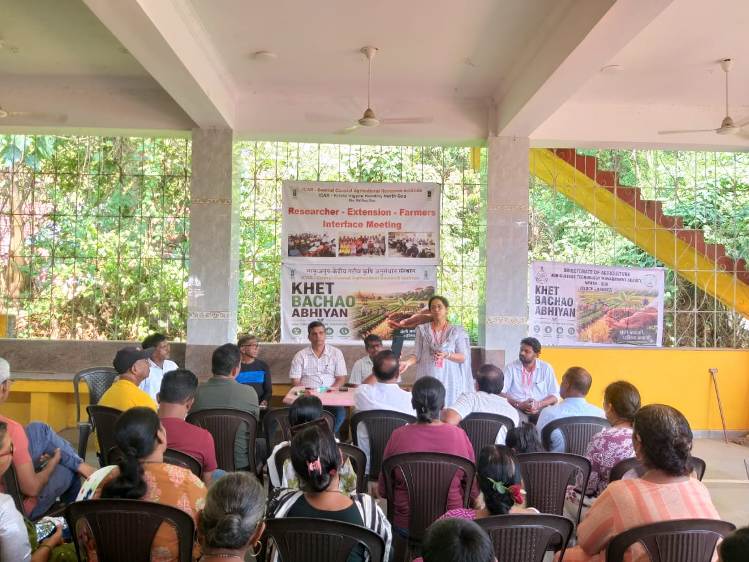
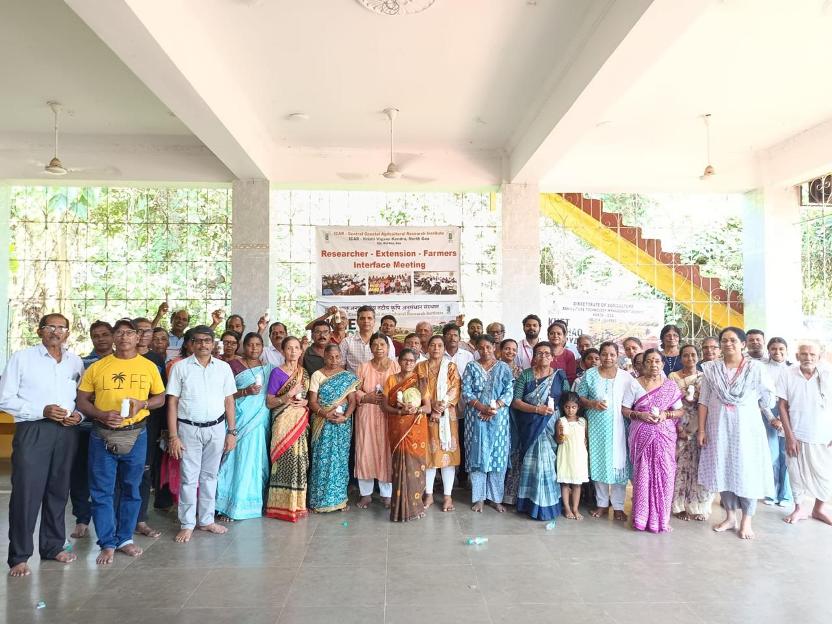

खेत बचाओ अभियान के अंतर्गत ICAR–CCARI एवं कृषि विज्ञान केंद्र, उत्तर गोवा द्वारा रबी फसलों में जल संरक्षण एवं नमी की कमी के प्रबंधन पर अनुसंधानकर्ता–प्रसार कार्यकर्ता–किसान संवाद आयोजित
ICAR–CCARI, KVK North Goa Organizes Researcher–Extension–Farmer Interface on Water Conservation and Moisture Stress Management for Rabi Crops under Khet Bachao Abhiyan
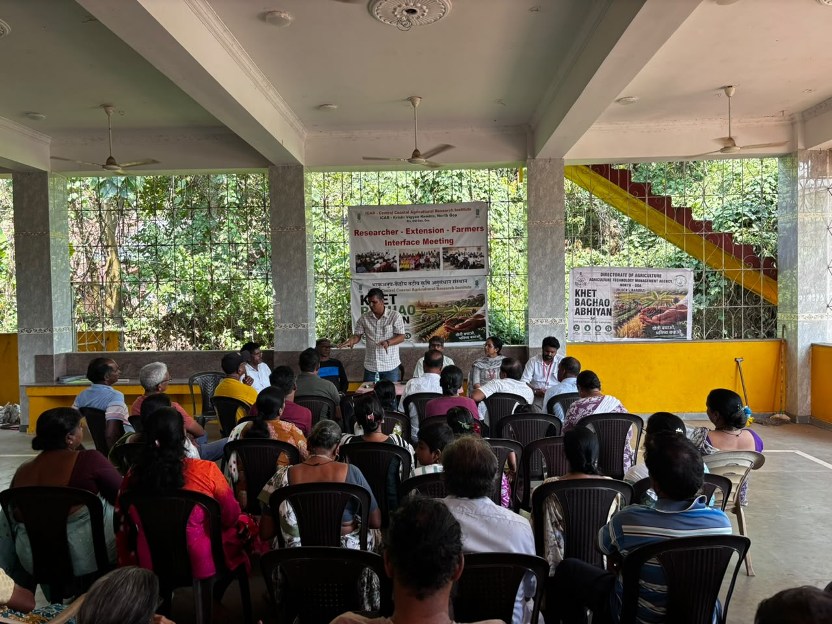
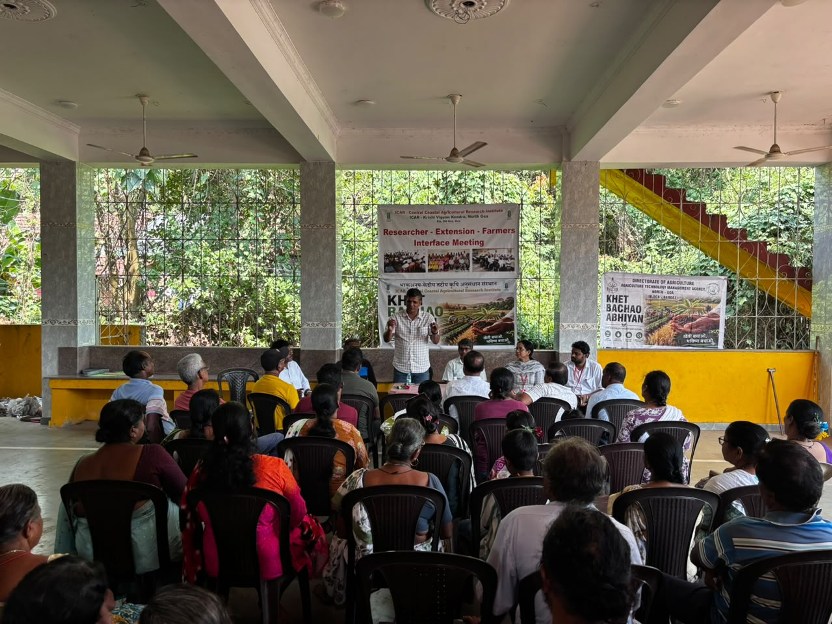
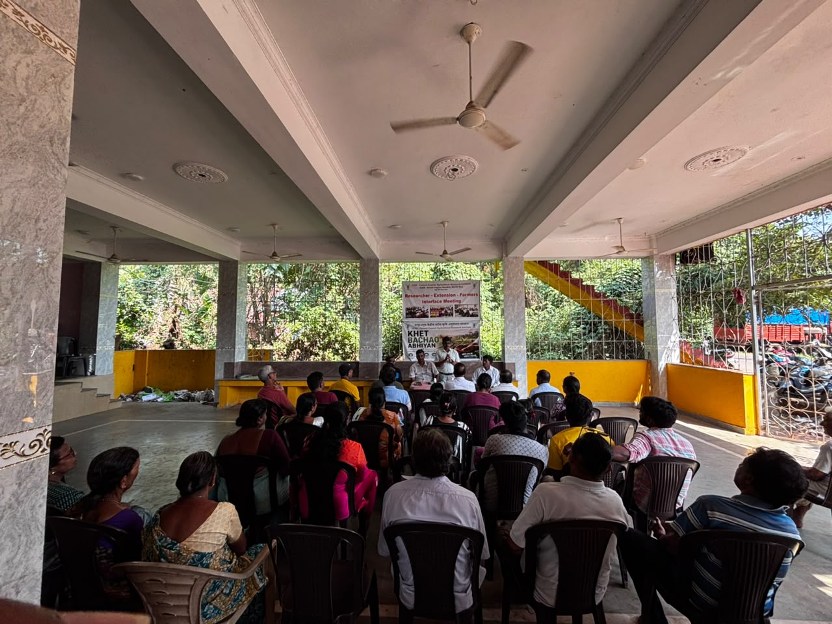
ICAR–Central Coastal Agricultural Research Institute, Krishi Vigyan Kendra, North Goa, in collaboration with the ATMA, North Goa, Directorate of Agriculture, Government of Goa, organized a Researcher–Extension–Farmer Interface Meeting on “Water Conservation and Strategies for Mitigating Moisture Stress in Rabi Crops during the Post-Rainy Season” under the Khet Bachao Abhiyan (KBA–Rabi 2026) at Gurim, Bardez, on 5 November 2026. The programme brought together agricultural scientists, extension officials and farmers to deliberate on location-specific strategies for improving the productivity, resource-use efficiency and resilience of Rabi crops under moisture-stress conditions.
Dr. N. Bommayasamy, Senior Scientist and Head, ICAR–KVK, North Goa, emphasized the importance of adopting short-duration and climate-resilient crop varieties suited to the post-rainy-season conditions. He highlighted seed hardening and seed priming, for improving germination, early crop establishment and tolerance to moisture stress. He also elaborated on in-situ moisture conservation, alternate-furrow irrigation, critical crop growth stages for irrigation, mulching and improved crop production practices for pulses, oilseeds and short-duration vegetable crops. He advised farmers to adopt suitable intercropping systems for efficient utilization of available soil moisture, improved resource-use efficiency and enhancement of soil fertility.
Dr. Shripad Bhat, Senior Scientist (Agricultural Economics), ICAR–CCARI, highlighted the importance of the traditional Kulagar-based plantation and intercropping systems of Goa for sustainable agricultural production. He emphasized the integration of cowpea and other suitable intercrops in plantation systems, along with organic spice production, to improve resource utilization, soil health and ecological sustainability. He also stressed the need to strengthen market linkages and value-chain approaches to improve farm profitability and enhance the economic returns of farming households.
Ms. Pallavi R. Shetye, Zonal Agricultural Officer, Bardez, highlighted the importance of soil-test-based nutrient management for efficient and balanced application of fertilizers and other nutrient sources. She also briefed the farmers on various government schemes, agricultural development programmes and financial assistance available to farmers for improving crop production and farm livelihoods.
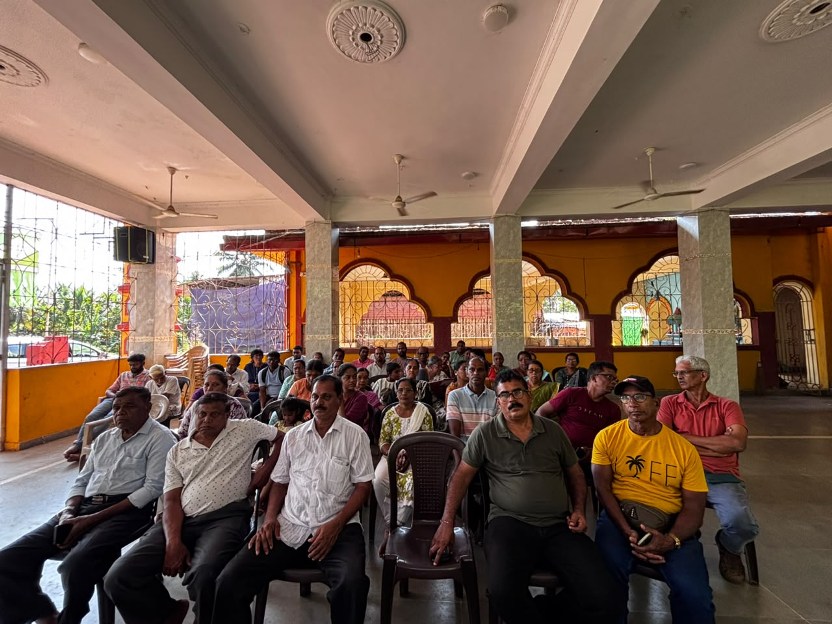
As part of the event, bio-NPK inputs were distributed to the participating farmers to promote the adoption of biological nutrient management practices and support sustainable Rabi crop production. A total of 44 farmers, comprising 23 men and 21 women, participated in and benefited from the programme. The programme was coordinated by Dr. N. Bommayasamy Dr. Shripad Bhat, Ms. Pallavi R. Shetye, Mr. Rahul Joundale; and Shri Pandurang Dharma Toroskar.