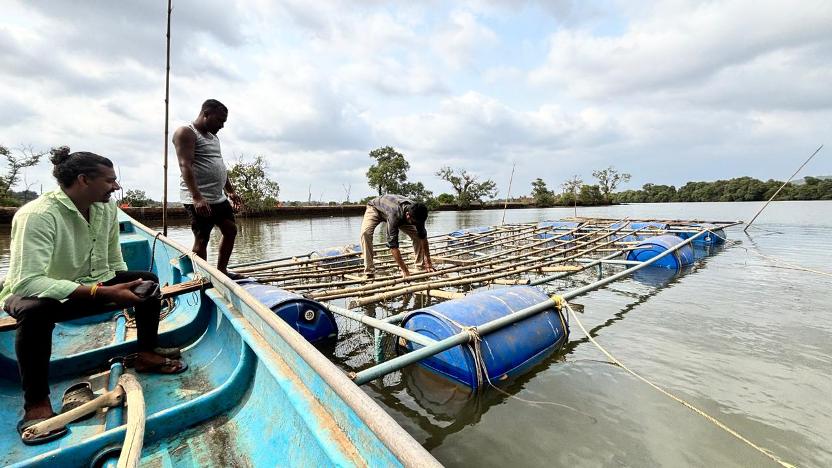
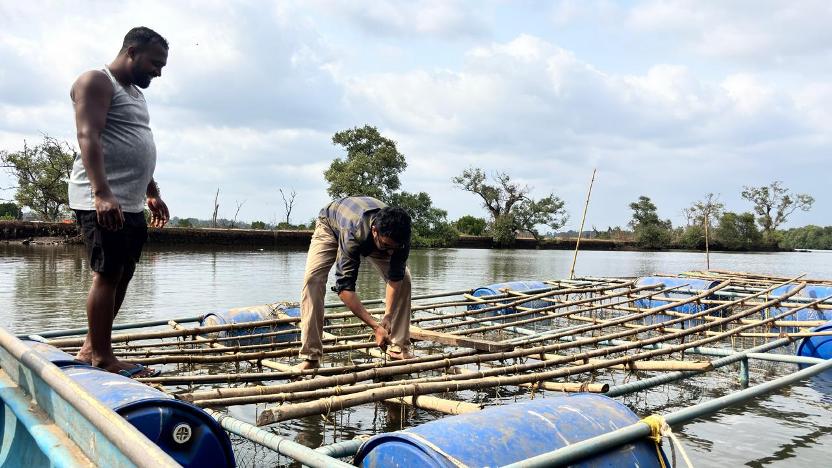
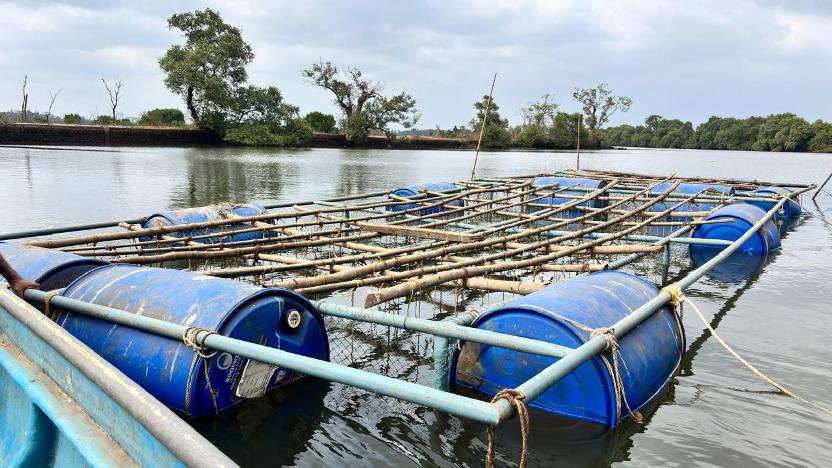
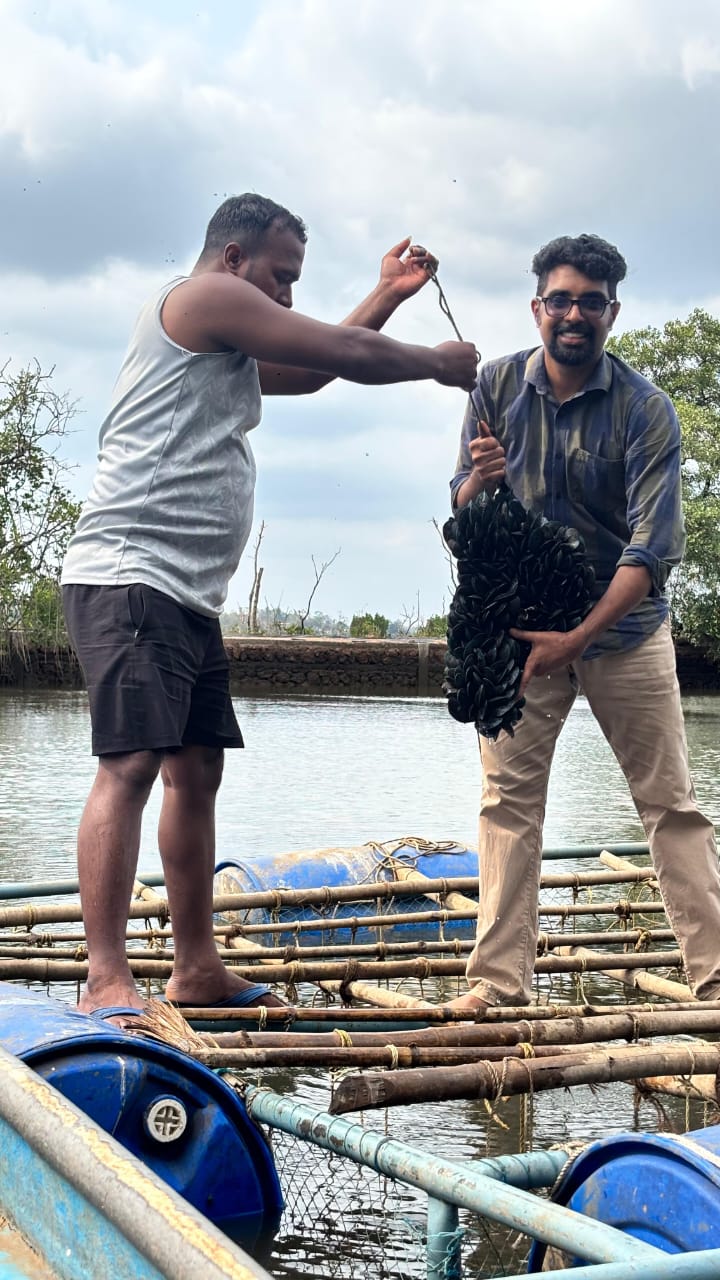
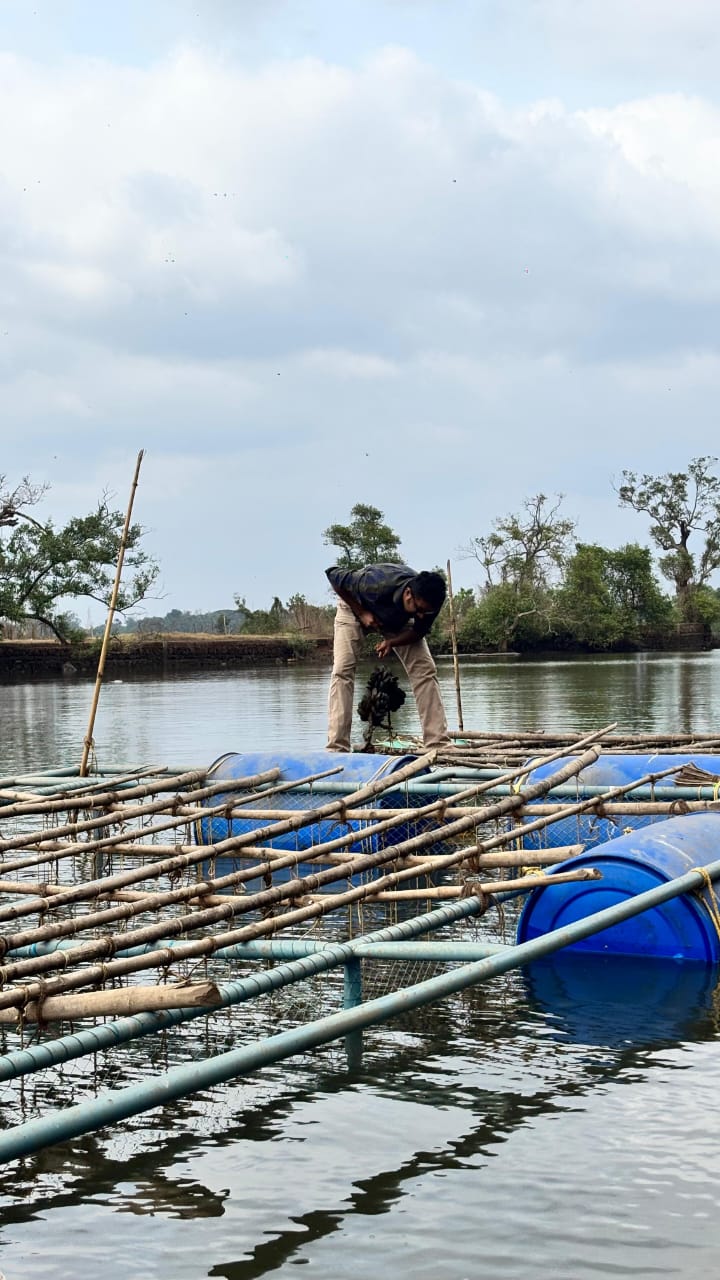
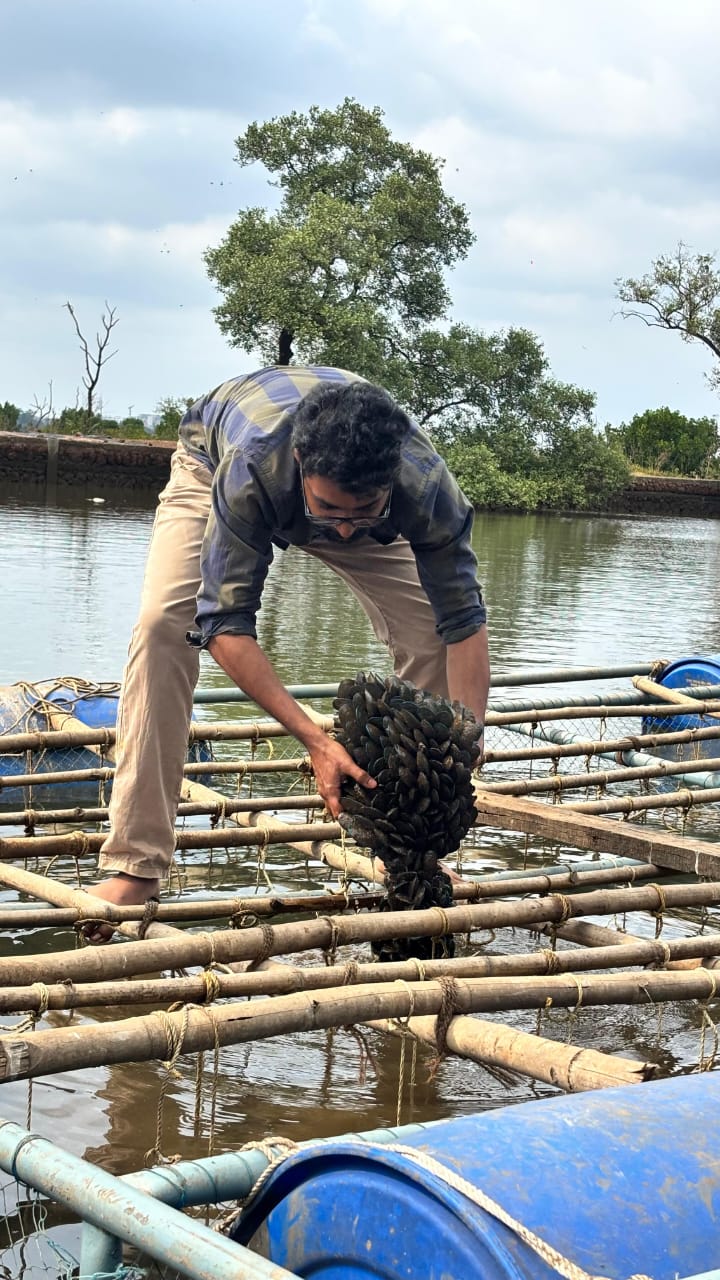
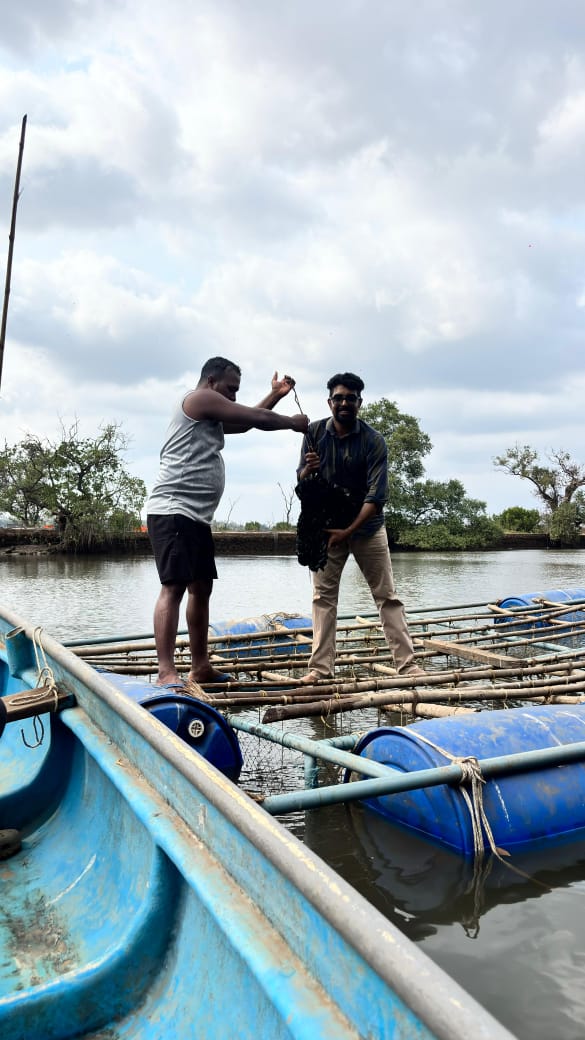

Field visit and interaction at mussel culture site at Carambolim, Goa
A field assessment and stakeholder interaction were conducted on 2 April 2026 at a mussel culture site operated by Shri. Vaibhav Emu Phadte in Carambolim, North Goa, with the objective of evaluating ongoing farming practices and engaging with farmers. During the visit, Dr. Sreekanth G.B., Senior Scientist (FRM) at ICAR-CCARI, provided technical guidance following direct interaction with the farming community. The culture system employed was raft-based, a method widely adopted in coastal and estuarine environments, and the infrastructure was observed to be well-maintained. The mussels exhibited satisfactory growth performance, indicative of effective farm management. Although the river water was turbid, a condition that can adversely affect feeding efficiency and physiological health, the farmers mitigated this constraint through regular biweekly cleaning of mussel shells to remove silt and fouling materials, followed by re-immersion, thereby maintaining favorable growth conditions. This adaptive management approach contributed to overall system performance. Dr. Sreekanth further recommended improvements including systematic monitoring of water quality parameters and adherence to consistent maintenance schedules to reduce stress on the stock and enhance productivity and sustainability. The visit demonstrated the viability of small-scale raft-based mussel farming in the region, highlighting the integration of indigenous practices with scientific advisories. Additionally, the inclusion of crab fattening systems within the culture framework was suggested as a strategy to augment farm income. Shri Trivesh Mayekar provided guidance on the crab culture practices to the farmer. ICAR–CCARI is planning to establish a multispecies culture demonstration site at the location with the active involvement of local farmers, aimed at diversifying production and strengthening livelihood opportunities. The programme was coordinated by Dr. Sreekanth G.B., Shri Trivesh S. Mayekar (Scientist- Fish genetics and breeding), and Mr. Mrudul Pendurkar (YP1).