
Farmers’ interaction sessions on climate-resilient cage aquaculture practices at Honnavara and Kundapura, Karnataka
(Under ADB-Funded Project: “Building Capacity for Climate Change Adaptation in Smallholder Fish Farming”)
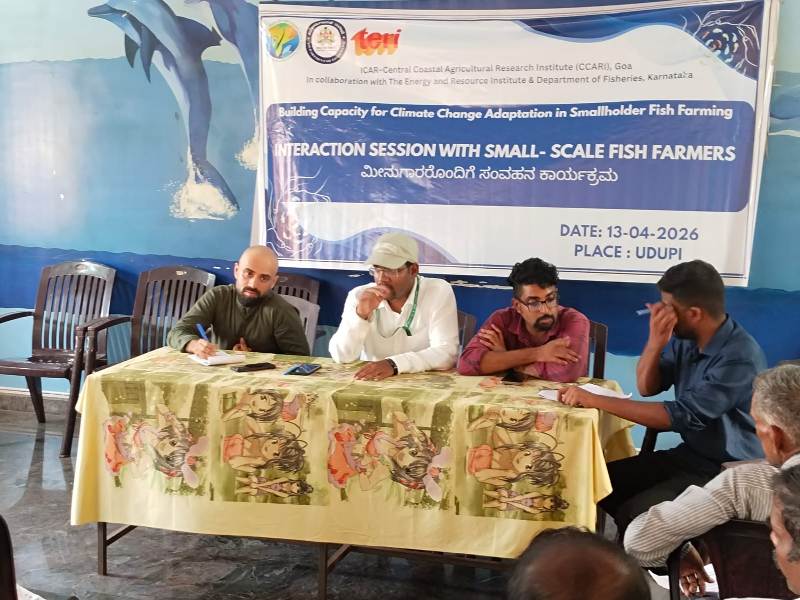
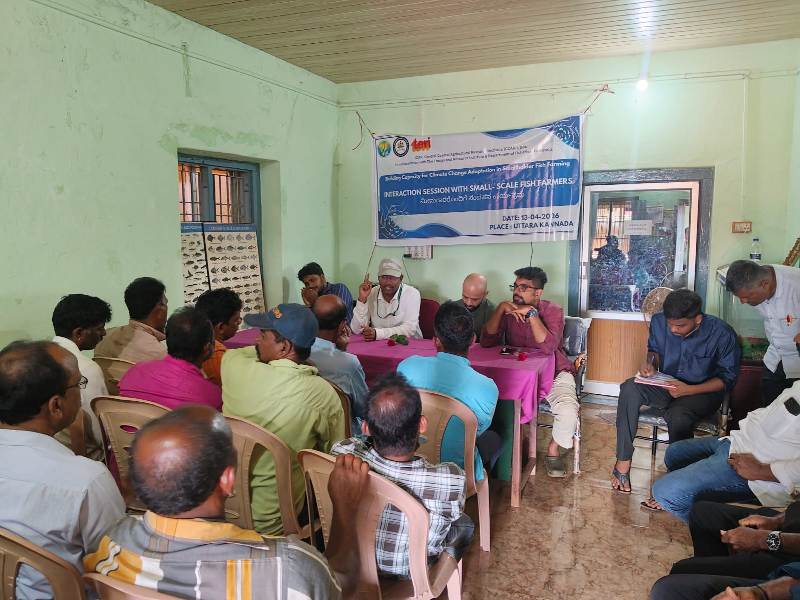
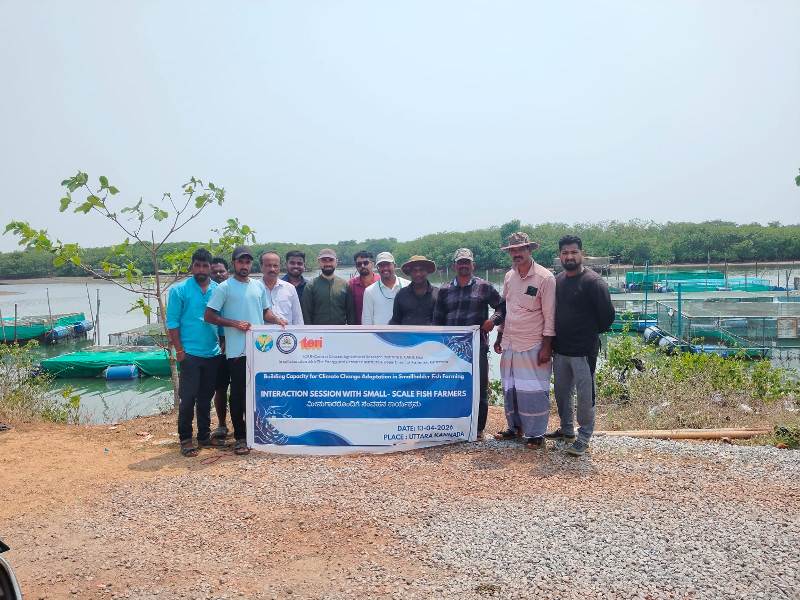
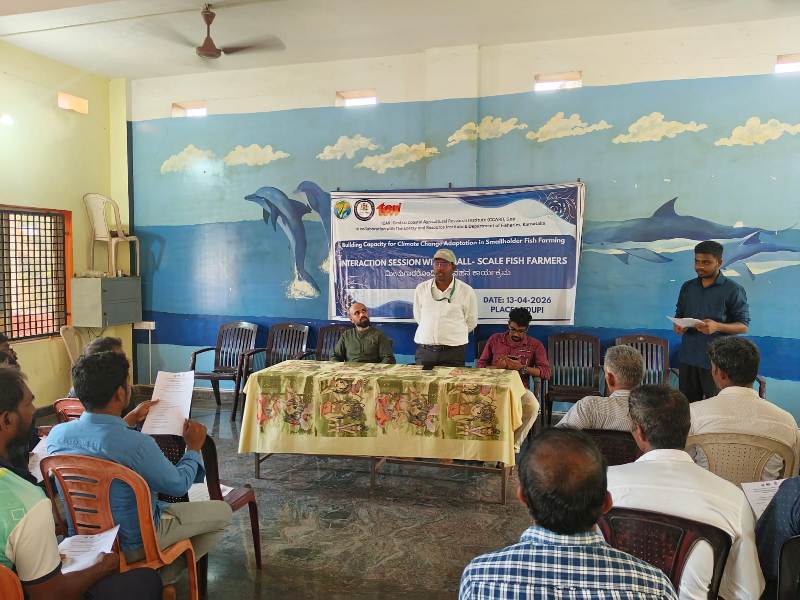
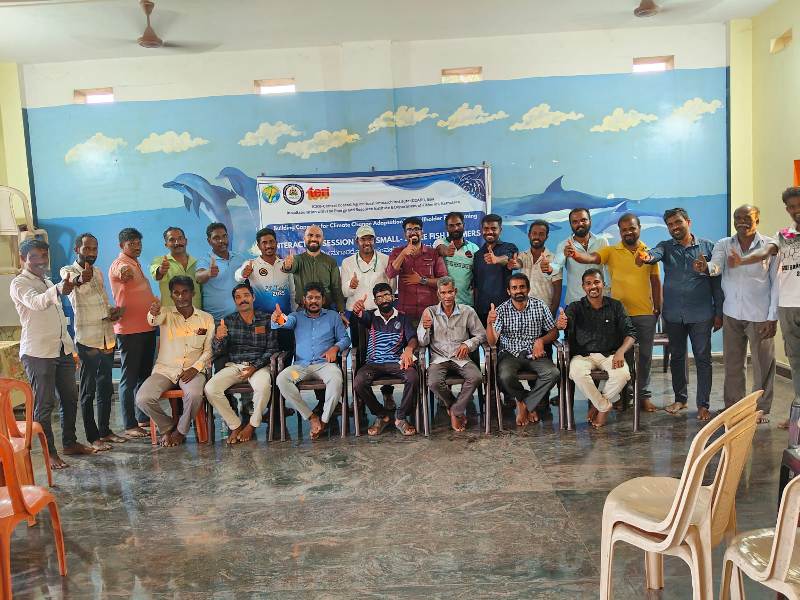
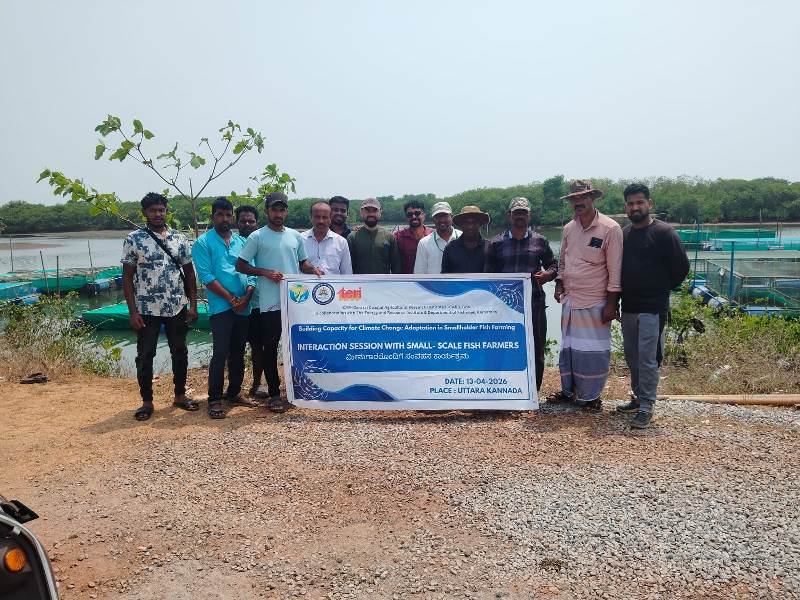
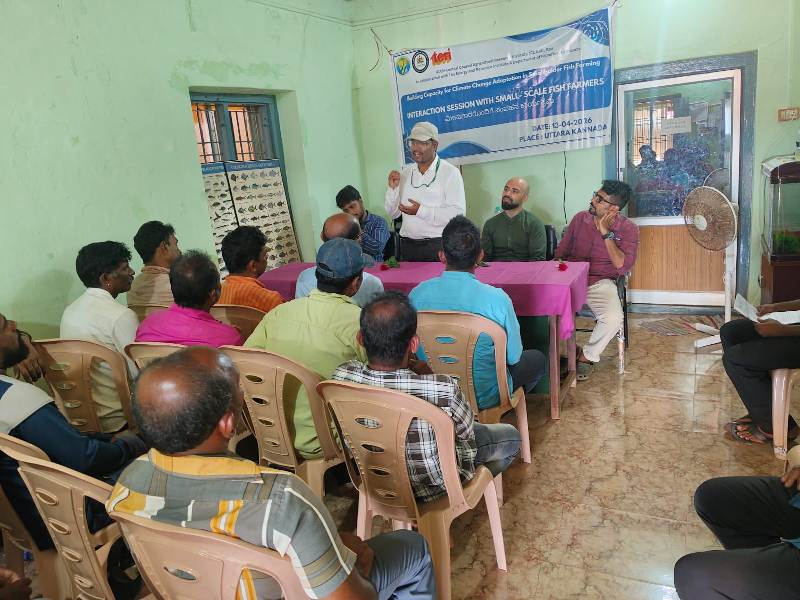
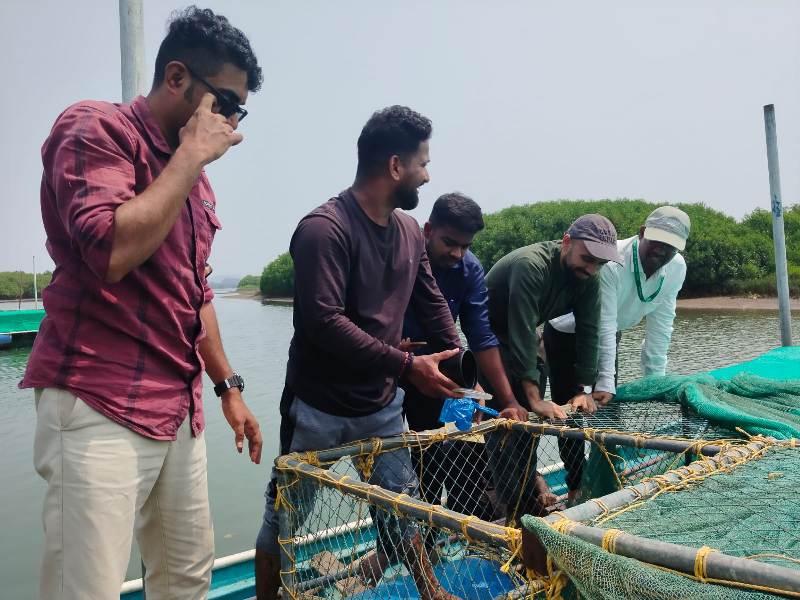
In pursuance of the research and capacity-building mandate under the Asian Development Bank (ADB)-funded project titled “Building Capacity for Climate Change Adaptation in Smallholder Fish Farming,” two Interaction Sessions were conducted on 13 April 2026 in coastal Karnataka, targeting smallholder fish farmers engaged in Asian Seabass (Lates calcarifer) cage culture. The first session was held at the Office of the Assistant Director of Fisheries, Honnavara, with participation of 30 active fish farmers, and the second at Nada Doni Bhavana, Uppunda, Kundapura, with 26 farmers—bringing the combined participation to 56 farmers across both locations. The sessions were led by Dr. Trivesh S. Mayekar, Scientist (Fish Genetics & Breeding) and Dr. G.B. Sreekanth, Senior Scientist (Fisheries Resource Management), ICAR–CCARI, with technical support from Dr. Elroy Joe Pereira, Associate Fellow, TERI, Goa, and coordination by Shri Abhishek Kenganal, State Level Coordinator (Karnataka), TERI. Shri Chetan, Assistant Director of Fisheries, Honnavara, additionally facilitated the Honnavara session. The scientific programme comprised an inaugural technical overview on climate-resilient aquaculture, expert presentations on sustainable fisheries management, and a structured interactive discussion addressing key field-level challenges. Technical areas covered included disease management and ectoparasite control in cage culture, Feed Conversion Ratio (FCR) optimization and feed management, fish seed quality and acclimatization protocols, water quality monitoring, scientific site selection criteria for cage installations, and biological cage cleaning using Pearl Spot (Etroplus suratensis) as an eco-friendly biofouling control measure. Value addition and post-harvest processing of fish and fishery products were also discussed as strategies to enhance income and market competitiveness. At Honnavara, the indoor sessions were supplemented by an on-site field exposure visit to active cage culture units, where participants observed cage installation, stocking practices, feeding schedules, net maintenance, and health management protocols under real operational conditions.
The interaction sessions yielded significant outcomes in terms of capacity building, knowledge dissemination, and institutional linkage strengthening. A total of 56 fish farmers received hands-on technical guidance on climate-resilient cage aquaculture practices, with enhanced understanding of scientific disease management, optimal stocking density, and water quality monitoring. The programme strengthened farmer–scientist linkages by facilitating direct engagement between coastal farming communities and the scientific community of ICAR–CCARI, while also reinforcing institutional collaboration with TERI, Goa, and the Karnataka Department of Fisheries. Farmers demonstrated increased awareness and interest in adopting innovative aquaculture technologies, including integrated culture systems and real-time monitoring tools, alongside sustainable practices such as biological cage cleaning. The sessions promoted livelihood improvement strategies through value addition and market linkage awareness, contributing to the project’s overarching objectives of enhancing aquaculture productivity, promoting sustainable coastal livelihoods, and building technical capacity among active fishermen through experiential learning and scientific knowledge transfer. The successful conduct of both sessions reaffirms ICAR–CCARI’s commitment to its capacity-building of farmers for livelihood enhancement in the coastal region.