
आईसीएआर–सीसीएआरआई द्वारा गोवा में जनजातीय किसानों के लिए टीएसपी के अंतर्गत वितरण-सह-प्रशिक्षण कार्यक्रम का आयोजन
ICAR–CCARI Organises Demonstration on Bamboo Aquarium and Awareness Programme on Fish Biodiversity Conservation in Goa
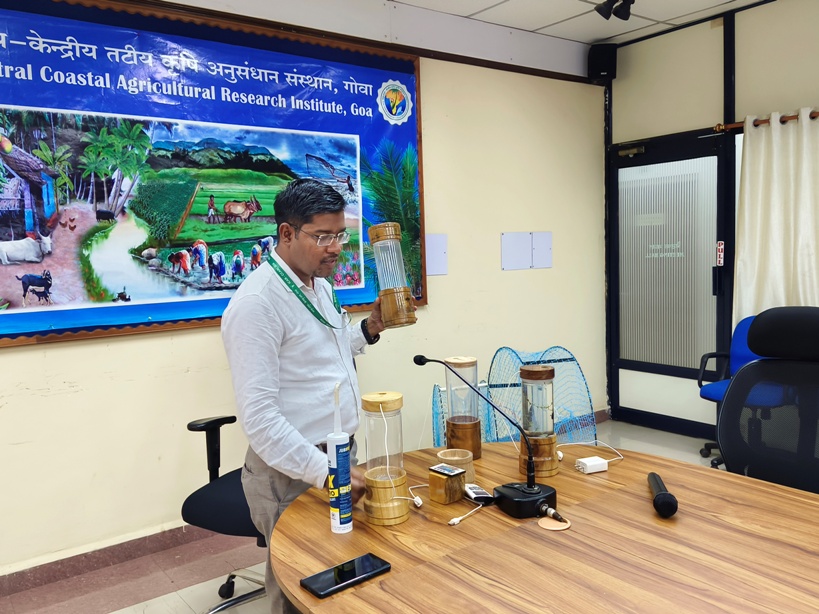
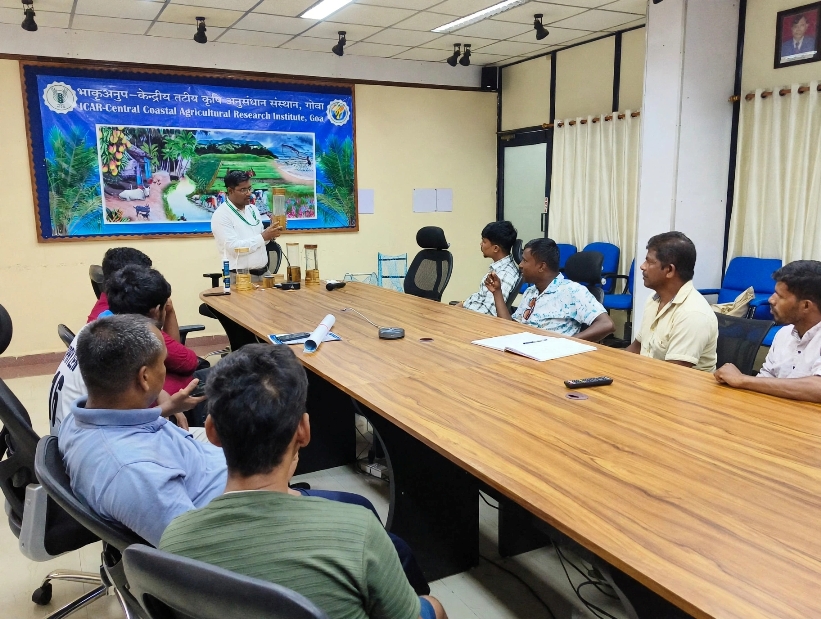
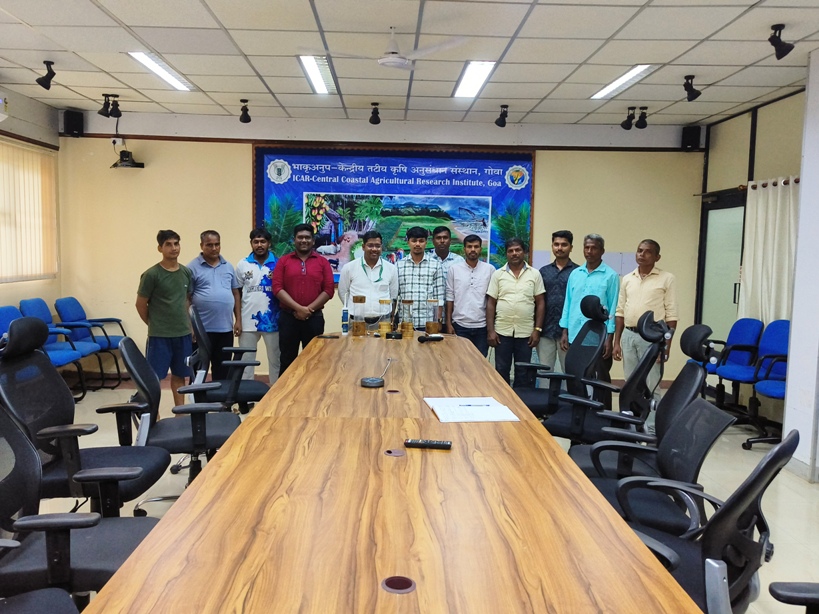
The ICAR–Central Coastal Agricultural Research Institute (ICAR–CCARI), Goa, organised a demonstration programme on bamboo aquarium manufacturing and an awareness programme on fish biodiversity conservation in Goa on 23rd September 2026 at the institute. A total of 15 participants attended the programme. The demonstration aimed to promote bamboo aquariums as an innovative, eco-friendly and cost-effective alternative to conventional aquariums using locally available materials, particularly bamboo. The initiative highlighted the potential of this innovative design to encourage the productive utilisation of local resources and create entrepreneurial opportunities in ornamental fisheries. Shri Trivesh S. Mayekar, Scientist (Fish Breeding and Genetics), ICAR–CCARI, Goa, demonstrated the bamboo aquarium and explained its different components, the materials used in its construction, and the procedure for setting it up. He also showcased different design variations, including models made using polished wood and other materials, highlighting the scope for developing attractive and customised aquarium designs.
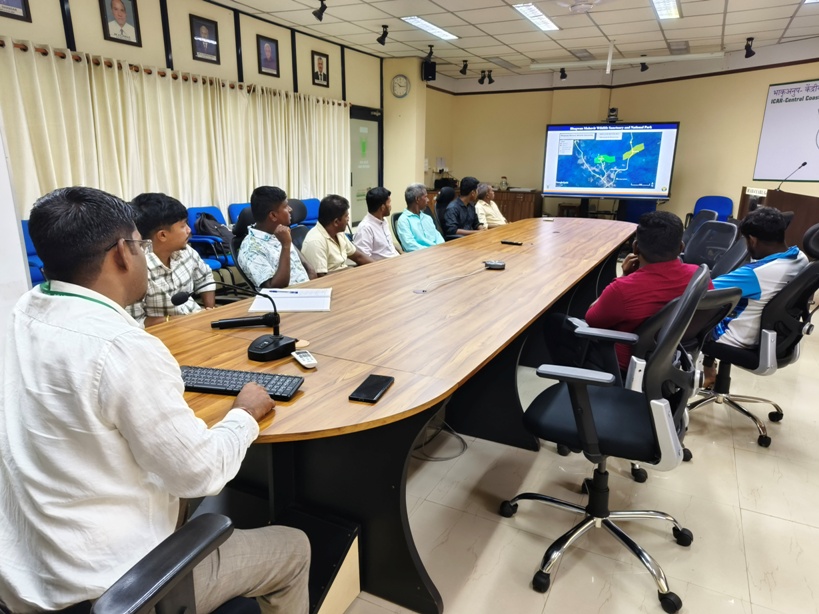
Following the demonstration, Shri Trivesh S. Mayekar delivered a technical awareness session on the ongoing research project entitled “Fish Biodiversity Survey, Inventory, and Documentation from Streams and Rivers in Notified Government Forest and Protected Areas of Goa for Conservation and Management.” He highlighted the ecological significance of forest streams and rivers as habitats for indigenous fish communities and their role in maintaining freshwater biodiversity. The participants were informed about the institute’s systematic efforts to survey, identify, document and assess the distribution of native fish species across notified government forests and protected areas of Goa. Special emphasis was placed on the conservation of Mahseer (Tor khudree), particularly the protection of its natural habitats and the maintenance of suitable ecological conditions for its survival. The importance of preventing water pollution, avoiding the disposal of garbage and other waste into streams and rivers, and adopting responsible practices to maintain healthy freshwater habitats was also emphasised. The session further highlighted the importance of scientific documentation, habitat conservation and captive breeding of selected indigenous fish species for long-term biodiversity conservation. The programme highlighted ICAR–CCARI’s commitment to freshwater biodiversity conservation and the promotion of eco-friendly bamboo aquariums as a means of encouraging entrepreneurship and sustainable livelihood opportunities in ornamental fisheries. The programme was coordinated by Shri Trivesh S. Mayekar, Scientist (Fish Breeding and Genetics), Dr. Sreekanth G. B., Mr. Aaron Vales and Mr. Mrudul Pendurkar, Young Professional-I, ICAR–CCARI, Goa.