अनुसूचित जाति उप योजना (SCSP) के अंतर्गत जागरूकता सह वितरण कार्यक्रम का आयोजन तटीय कर्नाटक के अनागल्ली में
1
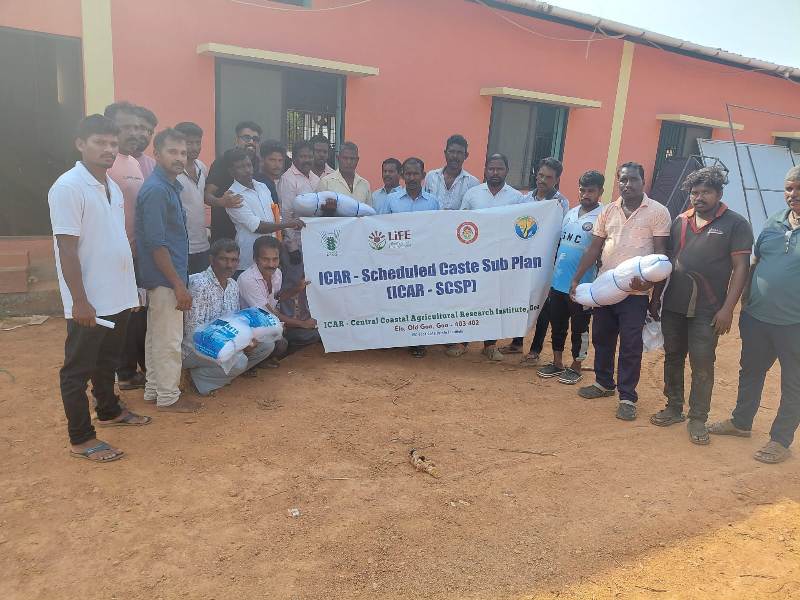
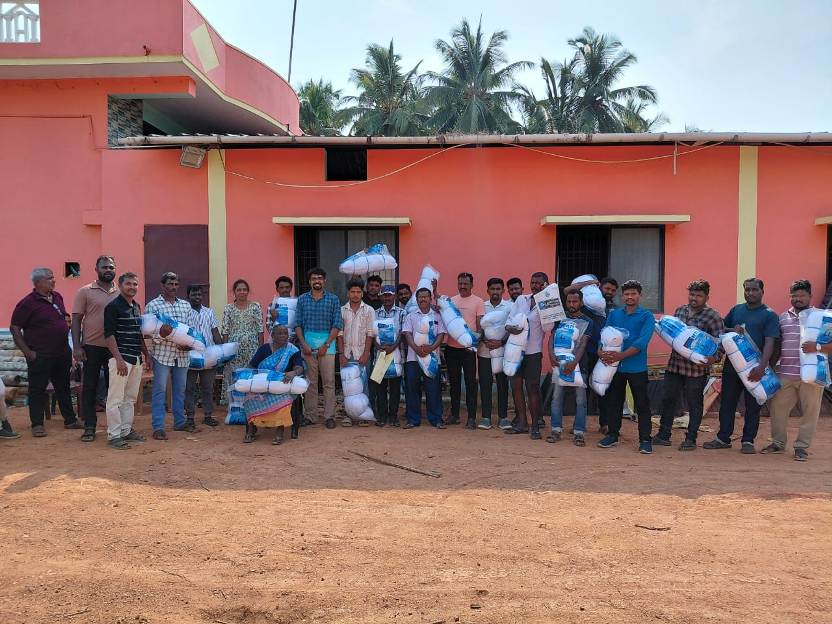
अनुसूचित जाति उपयोजना (SCSP) के अंतर्गत जागरूकता सह वितरण कार्यक्रम का आयोजन 24 अप्रैल 2026 को तटीय कर्नाटक के अनागल्ली, कुंडापुरा में किया गया। इस कार्यक्रम में पंचगंगावली मुहाना एवं समीपवर्ती तटीय क्षेत्रों में पारंपरिक मत्स्य उपकरणों पर निर्भर 25 मछुआरों ने भाग लिया। यह कार्यक्रम 11 अप्रैल 2026 को आयोजित पूर्व संवाद कार्यक्रम के क्रम में आयोजित किया गया, जिसमें मछुआरों ने घटती मछली पकड़, प्रदूषण, गाद जमाव, अत्यधिक मत्स्य दोहन तथा यंत्रीकृत नौकाओं से बढ़ती प्रतिस्पर्धा जैसी आजीविका संबंधी प्रमुख समस्याओं पर चर्चा की तथा मत्स्य उत्पादन बढ़ाने हेतु इन मुद्दों के समाधान की आवश्यकता पर बल दिया।
आईसीएआर-सीसीएआरआई के वरिष्ठ वैज्ञानिक डॉ. श्रीकांत जी.बी. ने मछुआरों को सामुदायिक आधारित मत्स्य प्रबंधन पद्धतियों को अपनाने, अंधाधुंध मत्स्य दोहन की सूचना संबंधित अधिकारियों को देने तथा प्रदूषण कम करने हेतु जागरूकता एवं क्षेत्रीय गतिविधियों में सक्रिय भागीदारी करने की सलाह दी। उन्होंने मछुआरों को अपनी गतिविधियों को सशक्त बनाने एवं मत्स्य विपणन में सुधार हेतु एक पंजीकृत समूह गठित करने का भी सुझाव दिया।
इस अनुवर्ती कार्यक्रम के अंतर्गत प्रतिभागियों को मछली पकड़ने के जाल वितरित किए गए। मछुआरों ने संस्थान के प्रयासों की सराहना की तथा भविष्य में अनुसंधान एवं विस्तार गतिविधियों में पूर्ण सहयोग का आश्वासन दिया।
Awareness cum distribution
programme under SCSP at Anagalli, coastal Karnataka
An
awareness-cum-distribution programme under SCSP was conducted at
Anagalli, Kundapura, Karnataka, on 24 April 2026 for fishers
primarily dependent on traditional fishing gears in the
Panchagangavali estuary and nearby coastal areas, with 25
participants attending. This programme followed an earlier
interaction held on 11 April 2026, during which fishermen
discussed key livelihood challenges such as declining fish
catches, pollution, siltation, overfishing, and competition from
mechanized vessels, emphasizing the need to address these issues
to enhance fish production. Dr. Sreekanth G.B., Senior Scientist
at ICAR-CCARI, advised the fishers to adopt community-based
fisheries management practices, report indiscriminate fishing to
the concerned authorities, and actively engage in awareness and
field-level initiatives to reduce pollution, while also
suggesting the formation of a registered group to strengthen
their activities and improve fish marketing. As part of this
follow-up programme, fishing nets were distributed to the
participants, who appreciated the institute’s efforts and
assured their full cooperation in future research and extension
initiatives.