करवार, कर्नाटक में जलवायु-अनुकूल हरित कृषि-पारिस्थितिकी-पर्यटन मॉडल के विकास पर क्षेत्र स्तरीय जागरूकता कार्यक्रम
Field Level Awareness Progrmme On Development Of Climate-Resilient Green Agro-Eco-Tourism Models, Karwar, Karnataka
Coastal regions possess rich fisheries resources, aquaculture systems, mangrove ecosystems and diverse natural landscapes that provide considerable potential for developing sustainable livelihood opportunities. Fish farmers and coastal communities often depend primarily on aquaculture and fisheries for their income, making livelihood diversification important for improving economic security and resilience. Aqua eco-tourism provides an opportunity to integrate aquaculture and fisheries with tourism, recreation, environmental education and ecosystem conservation. By utilising existing fish farms and coastal resources for visitor-oriented activities, fish farmers can develop supplementary sources of income while continuing their primary livelihood activities.
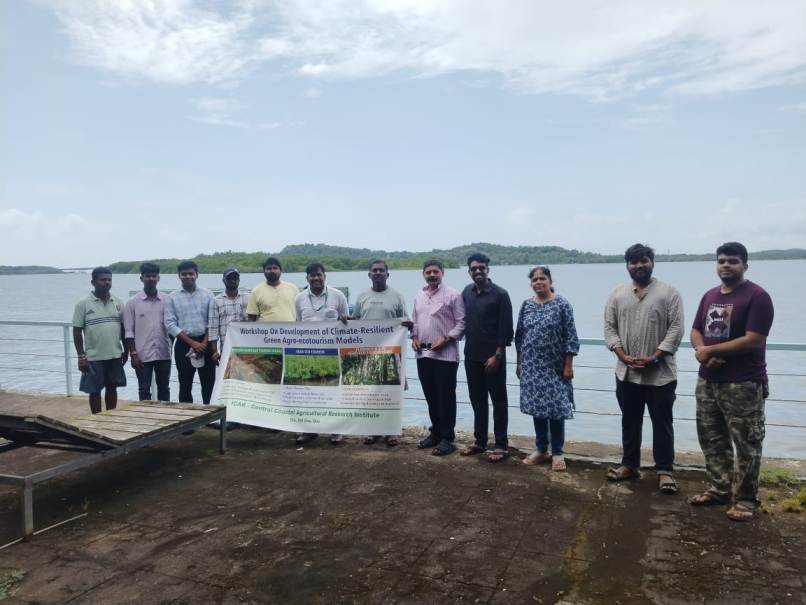
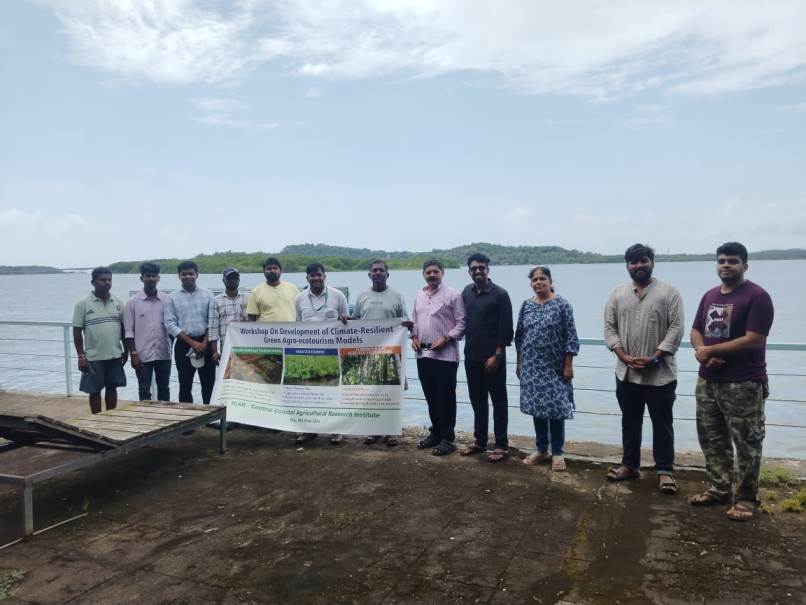
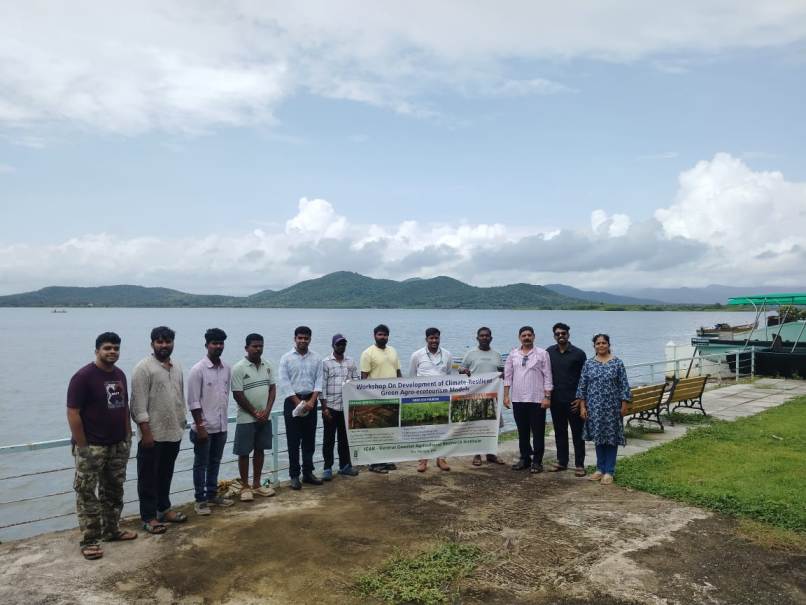
Against this background, a filed level awareness programme on the Development of Climate-Resilient Green Agro-Eco-Tourism Models, with special emphasis on aqua eco-tourism, was held on 3 September 2026 at River Deck, Karwar, Uttara Kannda, Coastal Karnataka. The programme aimed to highlight the importance and potential of aqua eco-tourism, explore opportunities for multiple-income generation among fish farmers, promote sustainable utilisation of aquatic resources, and create awareness about mangrove conservation, reforestation and livelihood improvement.The programme brought together experts and professionals from research, academia and development organisations. Dr. Trivesh S. Mayekar, Scientist, ICAR-CCARI Goa highlighted the importance of aqua eco-tourism and its potential for generating multiple sources of income for fish farmers. Dr. SreekanthGB, Scientist, ICAR-CCARI Goafocused on the sustainability and significance of aqua eco-tourism, emphasising responsible utilisation of aquatic resources and the need to balance tourism development with environmental protection. Dr. Shivakumar Haragi, Professor, Dept of Marine Biology, Karnatak University, Karwarexplained the significance of mangrove ecosystems and mangrove reforestation in maintaining coastal ecological health and strengthening resilience. Smt. Asha Hadkar, Senior Fellow and Researcher, Western Regional Centre, TERI, highlighted the role of aqua eco-tourism in improving the livelihoods of fish farmers through supplementary income and diversified livelihood opportunities. The programme also witnessed the participation of progressive cage culture farmers and Abhishek Kenganal, Consultant, CCARI and TERI, Goa.
The discussions highlighted that existing aquaculture resources can be linked with activities such as farm visits, fishing experiences, aquaculture demonstrations, nature-based activities and recreational experiences to create additional income opportunities. At the same time, aqua eco-tourism should follow sustainable and responsible practices to avoid adverse impacts on aquatic ecosystems. The integration of mangrove conservation and reforestation with aqua eco-tourism can further promote environmental awareness while providing nature-based experiences for visitors. Community participation was also recognised as important for ensuring that the benefits of tourism reach fish farmers, local youth and other coastal community members.Overall, the programme provided a valuable platform for exchanging ideas on integrating aquaculture, tourism, livelihood diversification, sustainability and coastal ecosystem conservation. It highlighted the potential of aqua eco-tourism as a climate-resilient livelihood diversification approach that can generate multiple income opportunities for fish farmers while promoting sustainable aquaculture, mangrove conservation and responsible utilisation of coastal resources.